
Last Updated On September 30, 2026 by ReviewNexa Editorial
Phytomem One Review: A 10-Ingredient Brain Formula Under the Microscope
A botanical memory supplement with genuinely interesting ingredients — wrapped in a sales pitch that invents medical-sounding terms. We read the label, the research, and the refund terms so you don’t have to.
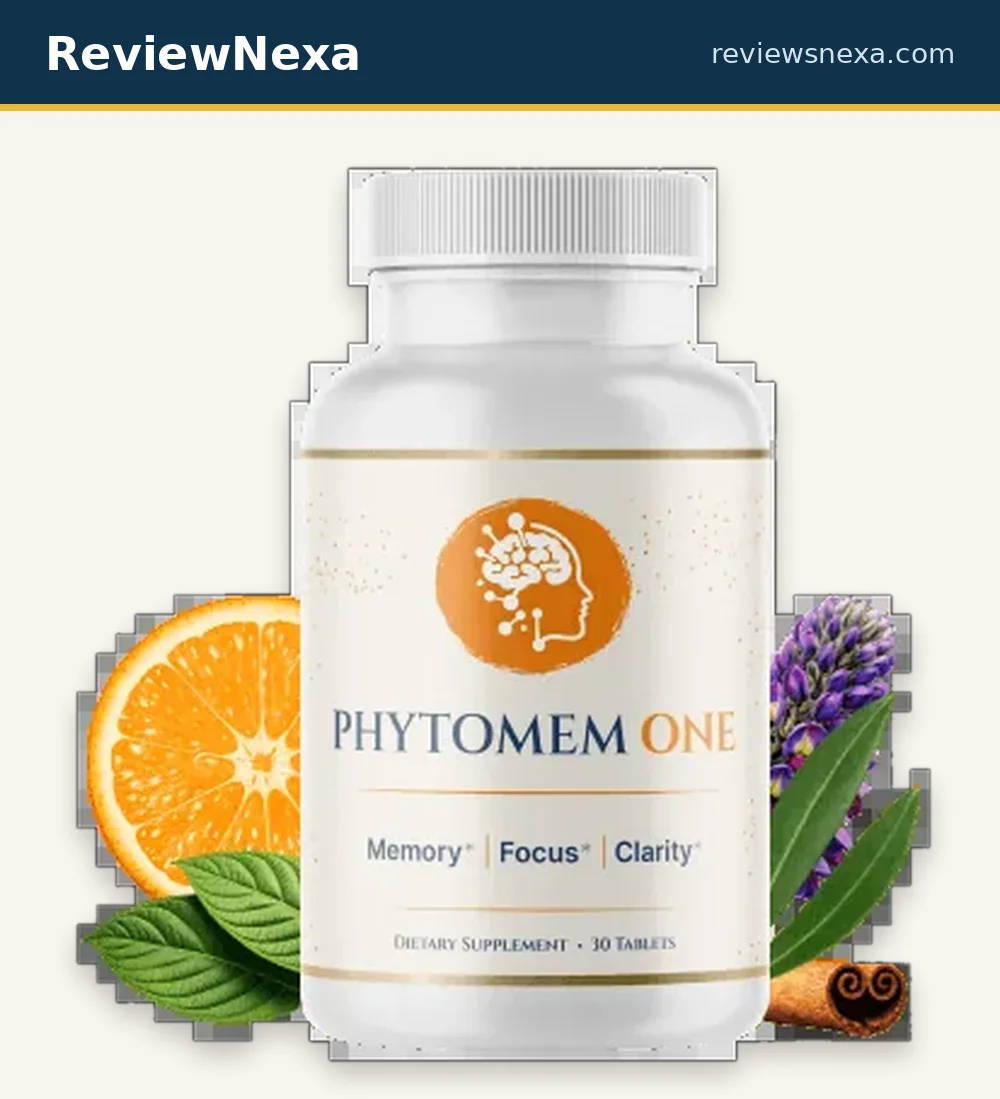
- 30 tablets per bottle
- 10 botanical ingredients
- Stimulant-free formula
- 60-day money-back guarantee
Phytomem One Specifications
| Product Name | Phytomem One |
|---|---|
| Category | Brain & Memory |
| Product | Phytomem One |
| Format | Tablets; 30 per bottle. The vendor's FAQ says one tablet daily with food. |
| What it claims | A "10-in-1 neuro-essential formula" for memory, focus, and mental clarity, built around a "Dual-Defense System" — the vendor's framing, not ours. |
| Guarantee | 60-day money-back guarantee advertised; processed through ClickBank. Refund mechanics (return shipping, timing) should be confirmed at checkout. |
| Official source | Vendor sales page (via the affiliate link on this page) |
| Pricing | Check the official website for current pricing and package options. |
| Availability | Official website only — verify at checkout. |
The plain facts first: Phytomem One is a botanical dietary supplement sold in 30-tablet bottles, aimed at adults who want support for memory, focus, and everyday mental clarity. It isn’t stocked in stores or on Amazon — the only way to buy it is the vendor’s own website, where checkout runs through ClickBank.
I went through the full ingredient list, cross-checked the vendor’s claims against third-party review coverage, and read the actual refund terms. The honest headline: a few of the ingredients have real scientific research behind them, but the label hides every single dosage, and the marketing leans on invented scare phrases. Neither half cancels out the other, and you need both sides to make a fair call.
If you’re short on time: this is a real, purchasable product with a genuine 60-day refund window — but the proprietary blends, the approval-style badge, and the invented terminology are serious transparency gaps. The rest of this review unpacks each one.
- Botanical brain-support tablets. Thirty tablets per bottle; the vendor’s FAQ says one daily with food. The formula is stimulant-free, which is a genuine plus if you’re sensitive to caffeine-heavy nootropics.
- Ten ingredients, zero disclosed dosages. Everything sits inside three proprietary blends, so no amount can be checked against the research. That’s the single biggest problem with the label.
- Some ingredients earn their place. Saffron has human trial data for mood and mild cognitive issues; berberine has a solid metabolic evidence base; oleuropein is a well-studied antioxidant. But none has been tested in this particular blend.
- Pricing snapshot (September 2026). One bottle was listed at $99, dropping to $79, $59, or $49 per bottle on the 2-, 3-, and 6-bottle plans. A 60-day money-back guarantee is advertised. Verify the live price before you pay — these numbers can change.
- Talk to your doctor first if you take medication. Berberine is known to interact with prescription drugs, including ones for blood sugar and blood pressure. The vendor says this too, and you should listen.
What Is Phytomem One?
The vendor sells Phytomem One as a “10-in-1 neuro-essential formula” — a daily botanical blend for memory recall, focus, and mental clarity, aimed mainly at adults who notice ordinary forgetfulness creeping in. The whole pitch is organized around what the vendor calls a “Dual-Defense System”: defend the brain against environmental stressors (the antioxidant blends), and keep the brain properly fueled through glucose-metabolism support (the metabolic blends).
On the logistics side, there’s nothing exotic. You can’t buy it in a store or from a marketplace — it’s direct-from-vendor only, billed through ClickBank, which means your statement shows a ClickBank charge. Review sources describe support as email-based. Purchases are reported as one-time payments; I found no indication of a forced auto-ship subscription, which is one less trap to worry about.
One boundary worth setting early: this is a supplement, not a medicine. It doesn’t treat dementia, reverse Alzheimer’s, or fix diagnosed cognitive conditions — and nothing on the label or in the research changes that. If memory problems are getting in the way of daily life, a doctor’s office is the right place to start, not a checkout page.
Product Facts at a Glance
| Product | Phytomem One |
|---|---|
| Category | Brain & Memory — botanical cognitive-support supplement |
| Format | Tablets; 30 per bottle. The vendor’s FAQ says one tablet daily with food. |
| What it claims | A “10-in-1 neuro-essential formula” for memory, focus, and mental clarity, built around a “Dual-Defense System” — the vendor’s framing, not ours. |
| Guarantee | 60-day money-back guarantee advertised; processed through ClickBank. Refund mechanics (return shipping, timing) should be confirmed at checkout. |
| Official source | Vendor sales page (via the affiliate link on this page) |
How It Works
Here’s how the vendor says Phytomem One works, translated out of the marketing into plain language. Remember this is their story — it’s not the same thing as proof.
The first prong is what the sales page calls the “Plastic Stranglehold.” The vendor argues that microplastics and other environmental toxicants breach the body’s barriers, triggering inflammation and oxidative stress in brain tissue — and positions the antioxidant ingredients (saffron, fucoxanthin, fucoidan, oleuropein) as the counterpunch. Microplastics turning up in human tissue, including brain samples, is a genuine emerging research topic. But “Plastic Stranglehold” itself is a phrase the vendor invented, not a diagnosis — and no dietary supplement has been shown to clear microplastics from the brain.
The second prong is “Brain Energy Starvation,” dressed up as “Type 3 Diabetes.” The vendor borrows the nickname some neuroscientists use for brain insulin resistance — the idea that aging neurons lose the ability to take up glucose efficiently — and positions the metabolic ingredients (berberine, Ceylon cinnamon, corosolic acid, kudzu flower) as support for healthy glucose utilization. The brain is famously glucose-hungry, and the ingredients’ metabolic effects have real literature behind them. Still, “Type 3 Diabetes” is not an official medical diagnosis, and the leap from “supports glucose metabolism” to “sharper memory” is the vendor’s inference, not a tested outcome.
Our take on the mechanism: the science the vendor gestures at is real enough, but there’s a canyon between an interesting mechanism and a bottle that delivers what the sales page promises. No clinical trial has tested this specific formula on any cognitive outcome.
What's Inside
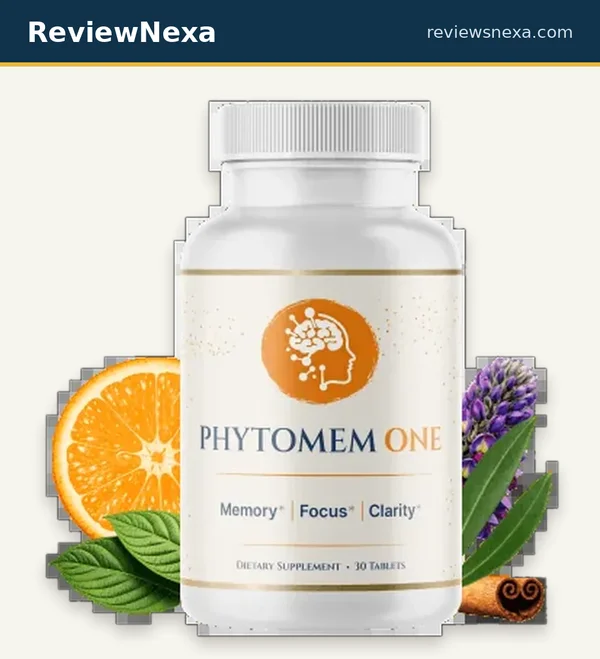
Ten ingredients, grouped by the vendor into three proprietary complexes. Here’s the full lineup with a short, honest note on each.
The Stranglehold Defense Matrix (antioxidant angle)
- Saffron extract. The strongest ingredient on the list. Saffron has been studied in small randomized human trials for mood and mild cognitive impairment, with some genuinely positive signals. It’s a legitimate inclusion.
- Fucoxanthin. A carotenoid from brown seaweed with antioxidant properties in lab studies. Direct human evidence for cognition is thin.
- Fucoidan. A seaweed-derived polysaccharide studied mostly in cell and animal models for anti-inflammatory and neuroprotective effects. Human data is limited.
- Oleuropein (olive leaf extract). The polyphenol family behind olive oil’s health reputation. Solid antioxidant and vascular literature; direct memory evidence is early-stage.
The Brain Fuel Restoration Complex (metabolic angle)
- Berberine HCl. A well-studied plant alkaloid for blood sugar and metabolic markers. It’s the ingredient with the most substantial evidence base — and also the one that interacts with prescription medications, so it cuts both ways.
- Ceylon cinnamon bark. “True” cinnamon, lower in coumarin than the cheaper cassia variety. Modest metabolic data; memory claims are speculative.
- Corosolic acid (banaba leaf). Traditionally used for blood sugar support, with small human studies on glycemic markers.
- Kudzu flower extract. The less-studied relative of kudzu root; the human data is preliminary.
The Neural Amplifier System
- Morosil. A branded Sicilian red-orange extract — better known from weight-management formulas than memory blends, which makes its presence here unusual. Some reviewers have also flagged a naming discrepancy between the sales page (“Morosil”) and the label (“Citrus sinensis”); that mismatch is unverified but worth noting.
- Xylitol. A sugar-alcohol sweetener. It’s almost certainly in the tablet as an excipient, not a brain ingredient — don’t count it among the actives.
Now the part that matters most. Label analyses published elsewhere put the three blends’ combined weight at roughly 458 mg, with no per-ingredient amounts disclosed anywhere. Why does that matter? Because berberine, for instance, is typically studied at hundreds of milligrams per day — and if it shares a 458 mg blend with nine other ingredients, the amount in the tablet could be far below anything research-tested. A blend is only as good as its doses, and the doses are the one thing the vendor won’t show you. Read the ingredient list as a ceiling, not a floor: it describes what the best version of each ingredient could offer, not what the undisclosed amount in this tablet actually delivers.
What the Evidence Can and Cannot Establish
What the evidence can establish: several of Phytomem One’s ingredients are the subject of real, peer-reviewed research. Saffron has randomized human trial data in cognitive and mood domains. Berberine has extensive clinical literature for metabolic markers and activates cellular energy pathways. Oleuropein has a large antioxidant and vascular evidence base. Those are facts about the ingredients, and they’re genuinely favorable.
What it cannot establish: anything about this specific bottle. No published clinical trial has tested the Phytomem One formula on memory, focus, or any other outcome. Every benefit claim is extrapolated from studies of individual ingredients — studied at disclosed doses that this product doesn’t provide. Add the proprietary blends on top, and you have a formula whose key ingredients may or may not be present in meaningful amounts.
A note on expectations: the most careful review coverage describes realistic outcomes as modest and gradual, if they occur at all — not the transformation the sales page implies. And there’s no verified independent user-review channel (no confirmed Trustpilot or BBB listing surfaced in research), so treat any dramatic testimonial as marketing copy, not evidence.
Pros and Limitations
Pros
- Some ingredients have real research behind them. Saffron, berberine, and oleuropein aren’t fairy dust — they’re compounds with published human or substantial preclinical data.
- Stimulant-free by design. No caffeine, no jitters, no crash — a real differentiator against stimulant-heavy nootropics.
- No reported auto-ship subscription. Review sources describe one-time purchases, removing one of the supplement industry’s classic traps.
- ClickBank checkout with a 60-day guarantee. ClickBank’s refund system is a genuine consumer protection layer — recourse beyond the vendor’s own promises.
Limitations
- Undisclosed per-ingredient dosages. With roughly 458 mg of blends shared across ten ingredients, no dose can be checked against the research — the single biggest transparency gap.
- No clinical trial on the finished formula. All benefit claims are borrowed from ingredient studies, never demonstrated for this product.
- Invented scare terminology. “Plastic Stranglehold” is marketing language, not a diagnosis; “Type 3 Diabetes” is a borrowed nickname, not a condition this treats. A company confident in its science shouldn’t need invented diseases.
- The approval-style badge. Reviewers have flagged an “FDA approved”-style badge on the sales page — dietary supplements aren’t FDA-approved, and the badge misleads.
- Berberine’s interaction risk. It can interact with medications for blood sugar, blood pressure, and anything metabolized by the liver. Medical advice isn’t optional here.
Price & Refund
Pricing is attributed to the vendor’s sales page as it appeared in September 2026 — treat everything below as a snapshot, not a quote, and confirm the live total at checkout.
The vendor listed a single bottle at $99, with per-bottle prices falling as you buy more: roughly $79 per bottle for two ($158 total), $59 for three ($177 total), and $49 for six ($294 total). The three- and six-bottle packages were listed with free US shipping; the two-bottle package carried a small shipping fee. Multi-bottle orders reportedly included three bonus ebooks. None of this is guaranteed to still be current.
The 60-day money-back guarantee is the real safety net — ClickBank processes the checkout, which gives the refund real enforcement behind it. But read the practical side that review coverage surfaced: refunds reportedly require physically returning the product at your own expense, original shipping isn’t refunded, and the 60-day clock starts at delivery, not at your first tablet. That’s meaningful friction if you’re ordering from outside the US or tend to let bottles sit unopened. Keep your ClickBank receipt email — if anything goes sideways with the refund, it’s the only paperwork you’ll have.
Who May Consider It
This one is fairly narrow. Phytomem One may be worth a look for generally healthy adults who notice everyday forgetfulness — misplaced keys, names that won’t surface — and who want to try a stimulant-free botanical supplement with the 60-day refund as a backstop. It suits people who are comfortable with proprietary blends and who’ve already talked to their doctor about the berberine interactions.
It’s not for anyone dealing with diagnosed cognitive impairment or dementia (that needs medical evaluation, full stop), anyone who is pregnant or nursing, anyone who needs to know exact dosages (you won’t get them), or anyone on prescription medication who hasn’t cleared the berberine question with a pharmacist or physician. And if invented medical terminology bothers you, the sales pitch alone will be a deal-breaker — which is a perfectly reasonable reason to walk away.
Questions to Ask Before Buying
- Am I okay not knowing the doses? Every ingredient is inside a proprietary blend. If dose transparency is a deal-breaker for you, this product fails your test immediately.
- Have I checked this against my prescriptions? Berberine interacts with medications metabolized by the liver, including common blood sugar and blood pressure drugs. A pharmacist can check in minutes.
- Am I buying from the vendor’s own page? Reviewers warn of copycat and lookalike sites. The vendor’s own checkout is the only legitimate route — treat any marketplace bottle as suspect.
- Do I have a realistic trial plan? Realistic outcomes are modest and gradual, not dramatic. If you order, use the 60-day window deliberately: take it consistently, and keep the return-shipping receipt in case you change your mind.
FAQ
Is Phytomem One FDA approved?
No. Dietary supplements aren't FDA-approved the way drugs are. The vendor claims an FDA-registered, GMP-certified manufacturing facility — that's a manufacturing-standard claim, not an endorsement of the formula. Reviewers have flagged the approval-style badge on the sales page as misleading, and they're right to.
Are the individual ingredient dosages disclosed?
No. All ten ingredients sit inside proprietary blends with no per-ingredient amounts published anywhere I could find. That means no dose can be checked against the research — it's the product's biggest transparency gap.
Can Phytomem One treat Alzheimer’s or dementia?
No. And it must not be bought for that purpose. It's a supplement for everyday cognitive support, not a medicine. Anyone dealing with real cognitive decline should see a doctor — many causes of memory symptoms, from B12 deficiency to thyroid issues to sleep apnoea, are treatable when properly diagnosed.
Should I take it alongside prescription medication?
No. Not without medical advice. Berberine can interact with medications by affecting liver enzymes involved in drug metabolism — particularly drugs for blood sugar, blood pressure, and cholesterol. The vendor itself advises consulting a doctor first, and that advice is worth following.
Is there a subscription or auto-ship program?
No. No subscription was reported by any review source — purchases are described as one-time. Confirm the billing model on the checkout page before you pay, since terms can change.
Should I buy only from the official website?
Yes. The vendor's own sales page, with checkout through ClickBank, is the only legitimate route. Reviewers warn of copycat and lookalike sites, and no verified retail or marketplace listing exists — treat any third-party bottle as suspect.
Is there really a money-back guarantee?
Yes. A 60-day money-back guarantee is advertised, backed by ClickBank's buyer protection. Just plan for friction: returns are reportedly at your expense, original shipping isn't refunded, and the clock runs from delivery. Keep your ClickBank receipt email.
Is Phytomem One a scam?
No. Phytomem One is a real, purchasable product that ships through ClickBank, with a stated 60-day money-back guarantee backing every order. "Scam" would mean fake goods or vanished payments, and we found no evidence of that.
Where can I buy Phytomem One?
Through the official website. Phytomem One is not sold on Amazon, eBay, or in retail stores — buying from the official site is the only way to guarantee an authentic product and qualify for the money-back guarantee.
Is Phytomem One safe? Are there side effects?
Generally. Phytomem One is made with natural ingredients in a registered facility, with no serious safety flags in our research. That said, no supplement is risk-free: check the label, follow the directions, and talk to your doctor first if you're pregnant, nursing, or taking medication.
Our Verdict: Phytomem One
Related Reviews

Testing statement: Desk research · No hands-on or clinical testing.
2 thoughts on “Phytomem One Review: A 10-Ingredient Brain Formula Under the Microscope”