
Last Updated On September 30, 2026 by ReviewNexa Editorial
MemoryFuel Review: The 5-Gram Creatine Brain Powder, Honestly Examined
MemoryFuel bets on a full, research-matched dose of creatine monohydrate instead of the usual under-dosed herbal capsule — an honest label with zero product-level trials behind it. Here’s where the science holds up and where it doesn’t.
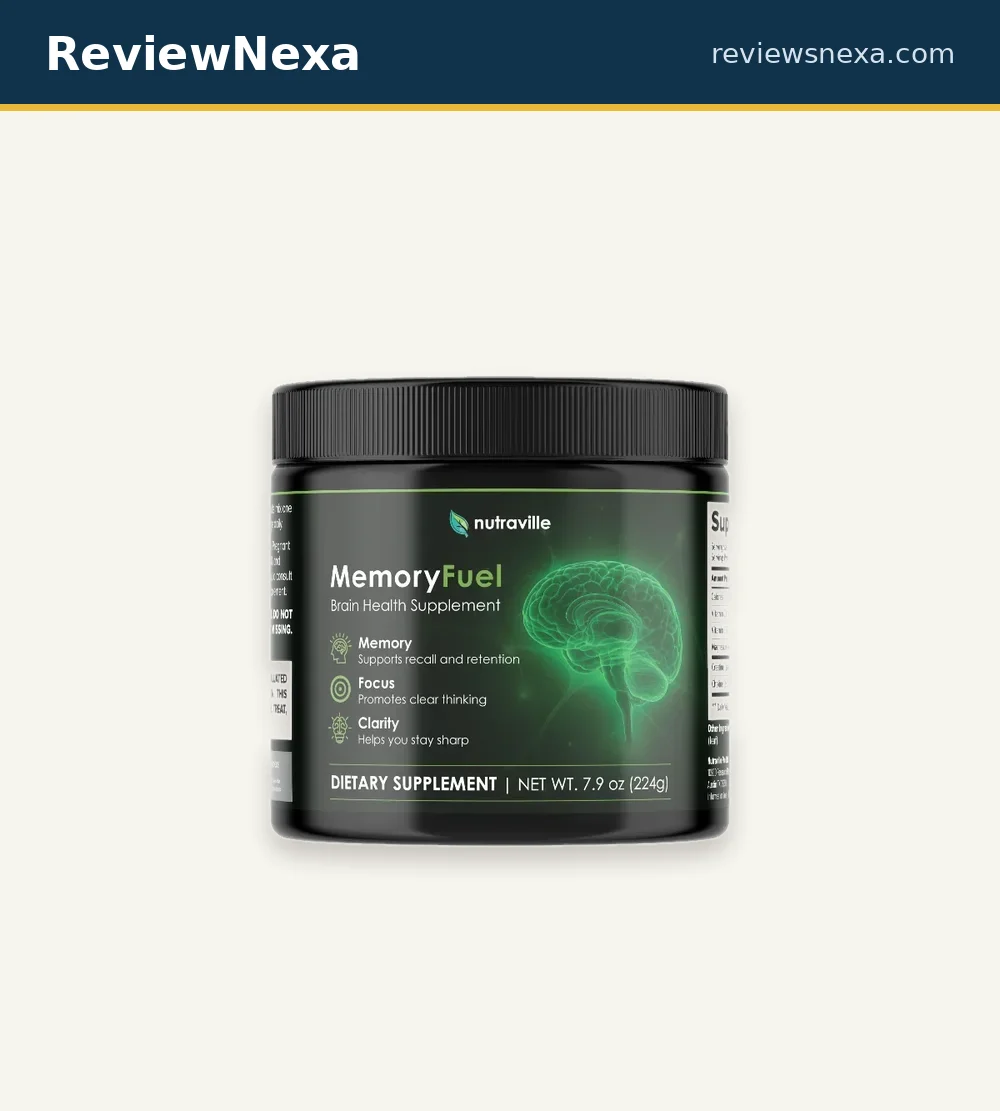
- Creatine-based powder · 1 scoop/day
- 5,000 mg creatine monohydrate
- No caffeine · stimulant-free
- 90-day guarantee stated by vendor
MemoryFuel Specifications
| Product Name | MemoryFuel |
|---|---|
| Category | Mind & Brain |
| Product | MemoryFuel |
| Format | Drink-mix powder — 1 scoop daily in ~8 oz water after breakfast (vegan, per label) |
| What it claims | The vendor claims it supports mental clarity and focus by nourishing the brain’s energy systems — framed around an “ATP gap” metaphor, which is marketing language, not a medical claim |
| Guarantee | 90-day money-back guarantee stated on vendor materials (some older sources cite 60 days — confirm current terms at checkout) |
| Official source | Vendor sales page (via the affiliate link on this page) |
| Pricing | Check the official website for current pricing and package options. |
| Availability | Official website only — verify at checkout. |
Brain supplements have a sameness problem. Scroll far enough and every jar promises sharper focus on the strength of a proprietary blend — a dusting of herbs dosed low enough to fit in a capsule and vague enough to dodge accountability. MemoryFuel walks a different road. It’s a drink-mix powder from Nutraville anchored by 5,000 mg of creatine monohydrate: a full, research-matched dose of one of the most studied ingredients in nutrition science, backed by a short supporting cast of theanine, choline, magnesium, and vitamins D3 and B12 — every dose printed on the label, no blends hiding anything.
That candor is genuinely refreshing in this category. But an honest review has to carry the rest of the story, too: no published trial has ever tested this exact formula, the reported effects sound subtle and slow, third-party sources can’t agree on pricing, and there’s a second, capsule-based MemoryFuel floating around the internet that has nothing to do with this powder. This review covers the current creatine powder only — and stays on the side of what can actually be verified.
- It’s a powder, not a pill. MemoryFuel’s current formula is a once-daily drink mix (1 scoop in ~8 oz of water after breakfast). Older capsule reviews describe a different or outdated version — don’t judge this powder by those.
- The dose is the differentiator. 5,000 mg of creatine monohydrate per scoop matches the amounts used in research — a rarity in brain formulas, where creatine usually shows up as a token sprinkle.
- Fully disclosed label. Six ingredients, every dose printed, no proprietary blends. L-theanine 200 mg, choline bitartrate 300 mg, magnesium glycinate 300 mg, vitamin D3 2,000 IU, vitamin B12 25 mcg — and zero caffeine.
- No trial on the blend itself. The science cited is ingredient-level. One real 2024 study found a single creatine dose helped cognition under sleep deprivation — but it tested creatine alone, not this powder, in sleep-deprived people.
- Subtle, slow, murky pricing. Review ecosystems describe quiet, gradual improvements over weeks — and third-party sources disagree on the actual price. Verify cost and guarantee terms live at checkout.
What Is MemoryFuel?
MemoryFuel is a creatine-based brain-support dietary supplement sold by the vendor Nutraville. It’s a vegan drink-mix powder: one scoop stirred into roughly 8 ounces of water each day, taken after breakfast rather than on an empty stomach.
The vendor’s pitch centers on brain energy. The brain is famously greedy tissue — hungry for fuel — and the marketing frames a supposed “ATP gap” in the brain’s energy-recycling system as the problem MemoryFuel’s creatine is meant to address. Treat that language for what it is: a marketing metaphor, not a medical diagnosis. The physiological role of creatine in ATP regeneration is real science; the “gap” framing is salesmanship.
Two things worth nailing down before going further. First, this is not a drug and not a treatment for Alzheimer’s, dementia, or any cognitive disorder — nothing on the label or in the evidence supports that framing, and this review won’t borrow it. Second, don’t confuse the powder with the capsule version still described on some review sites: a vegetarian capsule formula with bacopa, lion’s mane, phosphatidylserine, ginkgo, and huperzine A. That’s a different product — or an outdated one. Everything below is about the creatine powder.
Product Facts at a Glance
| Product | MemoryFuel |
|---|---|
| Category | Mind & Brain |
| Format | Drink-mix powder — 1 scoop daily in ~8 oz water after breakfast (vegan, per label) |
| What it claims | The vendor claims it supports mental clarity and focus by nourishing the brain’s energy systems — framed around an “ATP gap” metaphor, which is marketing language, not a medical claim |
| Guarantee | 90-day money-back guarantee stated on vendor materials (some older sources cite 60 days — confirm current terms at checkout) |
| Official source | Vendor sales page (via the affiliate link on this page) |
How It Works
The vendor’s logic goes like this: creatine supports the body’s ATP energy-recycling system in high-demand tissue, and the brain is about as high-demand as tissue gets. So a full daily dose of creatine monohydrate is meant to keep that recycling system well-stocked, with the supporting ingredients covering adjacent angles — L-theanine for calm alertness, choline as a building block of acetylcholine (a neurotransmitter involved in memory), magnesium for nerve function, and vitamins D3 and B12 as everyday essentials that drag cognition down when you’re deficient.
That’s a reasonable story as far as it goes, but notice the shape of it: it’s built entirely from ingredient-level science plus vendor reasoning. Nothing here has been tested as this six-ingredient combination in a clinical trial. The honest way to read the formula is as a well-dosed creatine delivery vehicle with sensible companions, not as a proven synergy.
One design choice deserves credit either way: there’s no caffeine in the scoop. Stimulant-free by design means no jolt, no crash, and no 3 p.m. regret about your sleep. If you’ve ever cycled off a jittery “focus” blend, you’ll understand why that matters — especially since the vendor itself frames this as a 90-day, slow-build protocol.
What’s Inside
The label is short and fully disclosed — six ingredients, every amount printed, no proprietary blends. Per scoop: creatine monohydrate 5,000 mg, L-theanine 200 mg, choline bitartrate 300 mg, magnesium glycinate 300 mg, vitamin D3 2,000 IU, and vitamin B12 25 mcg. No caffeine, no stimulants of any kind.
That 5-gram creatine dose is the headline. Research amounts for creatine typically sit in that range, and most brain formulas that bother including creatine at all use token amounts — enough for the label claim, not enough to mean anything. Whether you think the brain-angle is oversold or not, the dose itself is at least honest.
Usage is simple: one scoop in about 8 ounces of water, taken after breakfast. The “after food” direction isn’t arbitrary — mild stomach discomfort is the most commonly reported issue when people start creatine, and food tends to blunt it. The label advises against use during pregnancy or nursing, and the product isn’t for children.
What the Evidence Can and Cannot Establish
Start with the sentence that matters most: no published clinical trial has tested this exact six-ingredient blend. Any claim about MemoryFuel as a finished product is extrapolation from ingredient research — and extrapolation is weaker than evidence, however sensible the reasoning.
The strongest single study in the ecosystem is real but narrow. A 2024 peer-reviewed study published in Scientific Reports (several review sites misattribute it to Nature) found that a single dose of creatine improved cognitive measures under sleep deprivation. That’s legitimate science, and it’s the closest thing to direct support for creatine’s brain role — but it tested creatine alone, in sleep-deprived subjects, in a single dose. It is supportive context for the hero ingredient. It is not proof this powder works for everyday users.
At the ingredient level, the science is on steadier ground: creatine’s role in ATP regeneration in energy-demanding tissue is well established; L-theanine has been studied for calm, focused alertness; choline is an essential nutrient and a precursor to acetylcholine; magnesium supports nerve function (and the glycinate form is generally gentle on the stomach); B12 is essential for nerve health, and deficiency can cause fatigue and mental fog; D3 deficiency is associated with fatigue and low mood. None of that is controversial — and none of it proves the blend.
What the evidence cannot establish includes everything the marketing leans on hardest. Vendor figures like “97% recommend” or “3,247+ verified customer reviews” have no published third-party methodology — treat them as decoration. Named testimonials floating around affiliate reviews can’t be independently verified. The named formulator on vendor materials couldn’t be independently verified either, and the “FDA-registered, GMP-certified facility” line is a vendor statement, not a fact I could confirm. Head-to-head comparison tables against products like Prevagen or plain ginkgo are marketing tables, not studies — don’t read them as comparative evidence.
Pros and Limitations
Pros
- Full research-matched creatine dose. 5,000 mg per scoop is a real dose, not a label-dusting — genuinely unusual in brain formulas.
- Every dose disclosed. No proprietary blends anywhere on the label; you know exactly what you’re drinking.
- Stimulant-free. No caffeine means no jitters, no crash, and no sleep interference from a morning routine.
- Simple one-scoop protocol. One step a day, no capsule schedules or cycling to remember.
- Ingredients with long safety records at these doses — these are everyday nutrients, not exotic extracts.
- Long stated guarantee. A 90-day money-back window (per vendor materials) gives real time to judge a slow-building formula.
Limitations
- No clinical trial on the blend itself. All efficacy reasoning is extrapolated from ingredient research.
- Effects sound subtle and slow. The dominant review pattern is quiet, gradual improvement over 6–12 weeks — poor fit if you expect a fast, noticeable kick.
- Taste and texture complaints. Not everyone loves drinking their brain supplement; some reviewers found the powder underwhelming on palatability.
- Pricing is unclear. Third-party sources report conflicting price schemes — confirm the actual cost live at checkout rather than trusting any review’s numbers.
- Official website only. Not on Amazon or in retail stores, and the stated guarantee applies to direct purchases.
- Version confusion is real. Older capsule-based reviews describe a different formula — make sure what you’re buying is the powder.
- Not for everyone. Not for children, advised against in pregnancy or nursing, and anyone with a kidney condition or on prescription medication should check with a clinician first.
Price & Refund
Here’s where the review gets deliberately vague — because the sources are. Third-party sites report genuinely conflicting price schemes: one lists multi-bottle bundles in the high hundreds, another lists a single bottle around $49 with cheaper per-bottle pricing on larger bundles and free shipping on the bigger ones. I’m not going to pick a winner between them, because neither may reflect today’s checkout page. Check the actual price, the bundle options, and the shipping terms on the vendor’s page before deciding anything.
The refund side is clearer but still deserves a live check. Vendor materials state a 90-day money-back guarantee — which is generous and, importantly, long enough to match the product’s own 90-day framing, since creatine saturates tissue over weeks. Some older sources cite a 60-day guarantee instead, so confirm which one the current checkout honors. The guarantee is stated for direct purchases, which is another reason buying anywhere else would be a gamble.
Who May Consider It
This one makes most sense for people who already find creatine’s science convincing and like the idea of aiming it at mental clarity rather than the gym. It also fits anyone caffeine-sensitive who’s burned by jittery “focus” blends and wants something they can take in the morning without thinking about sleep. If label transparency is high on your list — knowing every dose, no blends — this formula respects that instinct.
It’s a poor fit for anyone expecting a fast, dramatic effect. The review pattern is consistent on this: subtle, gradual, weeks — and some buyers were plainly disappointed by that. It’s also not for children, not advised during pregnancy or nursing, and anyone with a kidney condition or on prescription medication should talk to a clinician first. None of that is medical advice from this page; it’s just the responsible read of the cautions in the sources.
Questions to Ask Before Buying
- Am I looking at the powder or the capsules? Older reviews describe a capsule formula with completely different ingredients. Confirm the checkout shows the creatine drink mix.
- What are today’s actual prices and guarantee terms? Sources conflict on both; treat the live checkout page as the only number that counts.
- Am I okay with subtle and slow? The fair-judgment window looks like 6–12 weeks. If you need something you can feel by Friday, this isn’t shaped like that.
- Do I have kidney issues or take prescription medication? If yes, a clinician’s input comes before any supplement checkout — this one included.
- Would plain creatine monohydrate do the job cheaper? It’s a fair question. The supporting cast adds convenience and the disclosed label, but a plain 5 g creatine powder is the budget benchmark to weigh it against.
FAQ
Is MemoryFuel a pill or a powder?
No. The current formula is a drink-mix powder, one scoop per day. Capsule-based reviews you may find online describe a different or outdated version with entirely different ingredients.
Does MemoryFuel contain caffeine?
No. The formula is stimulant-free by design. There’s no caffeine or other stimulant, so no jitters, no crash, and no reason a morning serving should interfere with sleep.
Has MemoryFuel itself been clinically tested?
No. No published clinical trial has tested this exact six-ingredient blend. The evidence is ingredient-level: creatine is well studied, including a 2024 study showing a single dose helped cognition under sleep deprivation, but that was creatine alone, not this powder.
How long before I’d notice anything?
No. Not within days, by most accounts. Review patterns and the vendor’s own framing point to 6–12 weeks for a fair judgment, since creatine saturates tissue gradually rather than delivering an acute effect.
Is there a money-back guarantee?
Yes. Vendor materials state a 90-day money-back guarantee, though some older sources cite 60 days. Confirm the current terms on the checkout page, and buy direct so the guarantee applies.
Can I buy MemoryFuel on Amazon or in stores?
No. Across the sources reviewed, it’s sold through the official website only, and the stated money-back guarantee applies to direct purchases. Don’t expect retail or marketplace listings.
Is Memoryfuel a scam?
No. Memoryfuel is a real, purchasable product that ships through the official checkout, with a stated 90-day money-back guarantee backing every order. "Scam" would mean fake goods or vanished payments, and we found no evidence of that.
Is Memoryfuel safe? Are there side effects?
Generally. Memoryfuel is made with natural ingredients in a registered facility, with no serious safety flags in our research. That said, no supplement is risk-free: check the label, follow the directions, and talk to your doctor first if you're pregnant, nursing, or taking medication.
Is Memoryfuel worth buying?
Depends. Memoryfuel is worth trying if the formula matches your specific concern and you're comfortable with the price — especially with the 90-day money-back guarantee removing most of the risk. It is not worth buying if you expect overnight or guaranteed results, because no supplement can promise those.
Our Verdict: MemoryFuel
Related Reviews
Testing statement: Desk research · No hands-on or clinical testing.
5 thoughts on “MemoryFuel Review: The 5-Gram Creatine Brain Powder, Honestly Examined”