
Last Updated On September 30, 2026 by ReviewNexa Editorial
Neuro-Balance Therapy Review: An Honest Look at the Fall-Prevention Kit
A spiky rubber ball, an exercise DVD, and a big story about a “dormant” nerve in the foot — here’s what the kit actually contains, what balance science really says, and who it’s genuinely for.
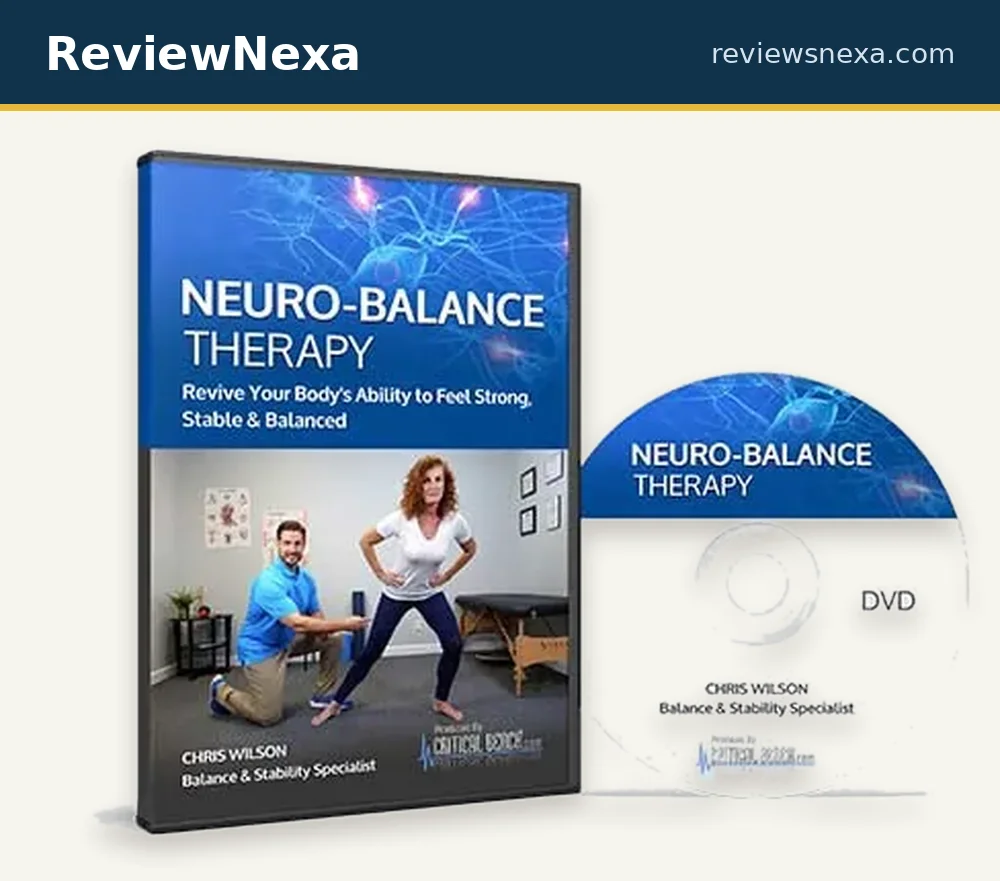
- Physical balance kit — not a supplement
- Spike ball + DVD + digital videos
- 10–15 min daily routine
- 60-day money-back guarantee
Neuro-Balance Therapy Specifications
| Product Name | Neuro-Balance Therapy |
|---|---|
| Category | Joint & Bone |
| Product | Neuro-Balance Therapy |
| Format | Physical kit (spike ball + exercise DVD) with digital video access and printable guides; digital-only tier available |
| What it claims | The vendor claims daily spike-ball foot stimulation “wakes up” the deep peroneal nerve, improving balance and reducing fall risk |
| Guarantee | 60-day money-back guarantee processed through ClickBank (vendor-advertised) |
| Official source | Vendor sales page (via the affiliate link on this page) |
| Pricing | Check the official website for current pricing and package options. |
| Availability | Official website only — verify at checkout. |
Falls are the part of getting older nobody likes talking about. One near-miss on a staircase, and suddenly the house you’ve lived in for thirty years starts feeling like an obstacle course. Neuro-Balance Therapy is a product built squarely for that moment — not a pill or a powder, but a small home kit with a spiky rubber ball, an exercise DVD, and digital videos built around a ten-second daily foot ritual.
The pitch leans hard on anatomy: a nerve in the lower leg called the deep peroneal nerve, which the vendor says goes “dormant” with age and can be “re-awakened” by rolling your foot over the spike ball each morning. This review separates that story from what the kit actually gives you — a structured, three-level balance routine you do for ten to fifteen minutes a day — and is honest about which part is supported and which part is marketing.
You’ll find no star rating here and no claim that we tested the kit ourselves — we haven’t. What follows is desk research across the vendor’s page and independent reviews, checked against what balance and proprioception science actually says. The short version: the kit looks like a sensible, low-risk experiment for mildly unsteady older adults — just don’t buy it for the neuroscience story.
- A physical balance kit, not a supplement: spike ball, exercise DVD, digital videos, and printed guides built around a daily foot-rolling ritual plus balance exercises.
- The “dormant peroneal nerve” mechanism is the vendor’s narrative, not a clinically proven outcome; what’s genuinely established is that structured balance and proprioceptive training helps older adults stay steadier.
- Two tiers reported at $37 digital-only / $47 physical as of September 2026, both with a 60-day money-back guarantee processed through ClickBank — confirm current pricing at checkout.
- Built for mobile-but-unsteady adults, typically 55+, and for the fear of falling that quietly shrinks people’s lives; it’s no substitute for medical care for diagnosed vestibular, neuropathic, or neurological conditions.
- Complaints center on slow or limited results for severe cases and the dated DVD format — not fraud or non-delivery. Avoid marketplace copies, which reviewers flag as a counterfeit risk.
What Is Neuro-Balance Therapy?
Start with the shape of the thing. Neuro-Balance Therapy arrives as a modest parcel, not a gym. Inside the physical package: a small, firm rubber ball covered in textured spikes, a DVD of follow-along balance routines, and access to digital versions of the same videos plus printable guides. The digital-only tier skips the ball and the disc entirely and costs less.
The daily practice has two halves and takes about ten to fifteen minutes. First the ritual — seated, roll the sole of each foot over the spike ball for roughly ten seconds, the stimulation step the whole program is named for. Then the exercises: gentle, chair-supported balance work across beginner, intermediate, and advanced levels, with no expectation you’ll rush through them. The audience is obvious from every page of the marketing — older adults, mostly 55 and up, who feel wobbly, have had a scare, or have quietly started avoiding stairs.
The program is credited to Chris Wilson, presented as a Florida-based balance specialist and NASM-certified personal trainer whose fitness career reportedly stretches back to around 1999. Third-party reviewers describe him as a real, verifiable person; we didn’t independently confirm the NASM credential, so treat it as the vendor’s claim rather than a verified fact. One credit worth noting: the pitch doesn’t traffic in fake celebrity endorsements or invented clinical trials — none of the independent coverage we read reported encountering those tactics.
Product Facts at a Glance
| Product | Neuro-Balance Therapy |
|---|---|
| Category | Joint & Bone |
| Format | Physical kit (spike ball + exercise DVD) with digital video access and printable guides; digital-only tier available |
| What it claims | The vendor claims daily spike-ball foot stimulation “wakes up” the deep peroneal nerve, improving balance and reducing fall risk |
| Guarantee | 60-day money-back guarantee processed through ClickBank (vendor-advertised) |
| Official source | Vendor sales page (via the affiliate link on this page) |
How It Works
Here’s the vendor’s chain of reasoning, in plain terms. The deep peroneal nerve runs down the lower leg and into the foot, where it helps lift the toes and carries the sensory signals — proprioception — that tell your brain where your foot is in space. Wilson’s argument is that this nerve grows sluggish with age, so the foot-to-brain communication that keeps you upright degrades, and that pressing a spiked ball into the sole each morning “re-awakens” it. The three exercise levels then train the ankles and legs to respond to the supposedly improved signal.
Two things can be true at once. Proprioceptive and balance training genuinely is an established physiotherapy tool for older adults, and the deep peroneal nerve is real anatomy doing roughly the job described. What isn’t established is the specific chain the marketing leans on: that age puts the nerve to sleep and ten seconds of spike-ball rolling wakes it up. No clinical trial of this kit exists in any source we found. If the routine helps, the likeliest explanation is the ordinary one — daily balance practice, done with support, in a sensible progression.
What's Inside
The box is small, and that’s worth saying outright — the value here is the program, not the equipment. What you get:
- The spike ball — the signature piece. A small, firm rubber ball covered in textured spikes, used for the daily foot-rolling ritual. Physical package only; reviewers say it feels odd at first — especially with sensitive feet — then gets easier after a few sessions.
- The exercise DVD — follow-along balance routines in three levels: beginner, intermediate, advanced. The DVD format is dated, which multiple reviewers flag; the digital access does the real work for anyone without a player.
- Digital video access — streaming or downloadable versions of the program, available immediately after ordering. Included in both tiers — this is the core of the program.
- Printable PDF guides and workout schedules — the structure that keeps daily compliance realistic.
- Bonus fall-proofing materials — home safety extras; similar checklists exist free online, so don’t weigh these heavily.
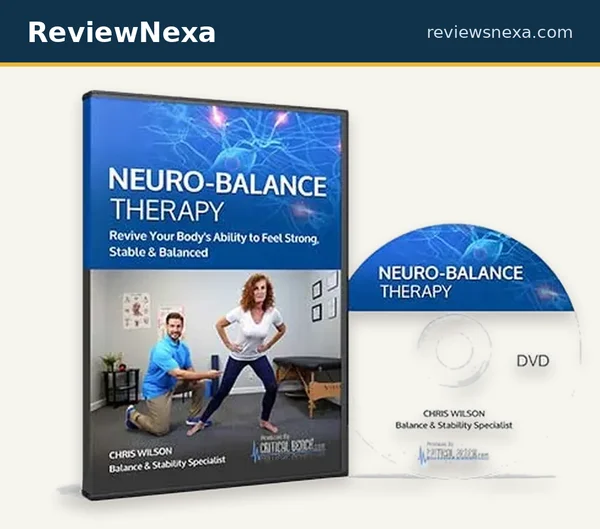
The spike-ball ritual at the center of the program — rolling the sole of each foot over the textured ball for about ten seconds before the balance exercises.
Delivery of the physical package is stated as 3–10 business days. Nothing in the box needs batteries, assembly, or a technician — the setup burden is effectively zero: unwrap, press play, roll the ball.
What the Evidence Can and Cannot Establish
Let’s be precise about what can and can’t be claimed — this is the section that matters most. No clinical trial has tested Neuro-Balance Therapy itself. The vendor’s page doesn’t cite one, and neither does any independent review we found. That’s the single most important sentence here.
What is genuinely established sits one level down. Structured balance and proprioceptive training reduces fall risk in older adults — that’s real, mainstream physiotherapy. The deep peroneal nerve really does contribute to foot sensation and toe control. But those are general principles, not evidence that this specific kit works, and a spike ball is not the same thing as a physiotherapy program. The user feedback we found is anecdotal: one long-form independent reviewer, initially skeptical, reported steadier mornings and less ankle wobble after about ten weeks of consistent use; other users describe confidence returning after falls. Treat all of that as anecdote, not proof.
What cannot be established from anything we reviewed: that the peroneal nerve goes “dormant” with age in the way the marketing describes, that the spike ball specifically “re-awakens” it, or that the kit outperforms ordinary balance exercise done consistently. The marketing’s confidence runs ahead of the evidence — and a trustworthy review has to say so plainly.
Pros and Limitations
Pros
- Structured three-level system designed for genuinely unstable beginners, not the already-fit
- Short daily sessions (10–15 minutes) make consistency realistic for older adults
- Non-invasive, low-impact, and chair-supported — the design acknowledges real fall risk
- 60-day ClickBank-backed guarantee lowers the buyer’s financial risk
- One-time payment with no subscription or auto-ship attached
Limitations
- No clinical trial on this specific kit; the nerve “awakening” mechanism is vendor narrative
- Results are slow and uncertain, with limited help for diagnosed vestibular or neurological conditions
- The DVD format is dated, and there’s no live support or community
- Spike ball can be uncomfortable at first for sensitive feet
- Only works with daily use — sporadic users report the least benefit
Price & Refund
As reported in September 2026, the vendor’s page shows two tiers: $37 for digital-only access (videos, guides, bonuses — no ball, no DVD) and $47 for the physical package (everything plus the DVD and spike ball, shipped within a stated 3–10 business days). The $47 is presented as discounted from a crossed-out $97 — standard strikethrough framing; treat the discount as theater, not a deadline. Both tiers carry the same advertised 60-day, unconditional money-back guarantee, with refunds processed through ClickBank. No subscription or auto-ship is attached to the offer, per the vendor’s page — but prices and terms change, so verify the live checkout before paying.
Who May Consider It
The best fit is easy to describe: a mobile but unsteady adult — typically 55 or older — who feels wobbly on stairs or uneven ground, has had a fall or a near-miss, or has started quietly shrinking daily life out of fear of falling. It’s also the kind of thing an adult child buys for an aging parent. The people it isn’t for: anyone whose unsteadiness comes from a diagnosed vestibular disorder, advanced neuropathy, Parkinson’s, MS, or a similar condition — for those, the right move is a doctor or physiotherapist, not a spike ball. And if you won’t do ten minutes a day, be honest about that before spending the money — sporadic users report the least benefit of all.
Questions to Ask Before Buying
- Is my balance problem the mild, age-related kind — or something a doctor should evaluate first?
- Will I actually do ten minutes a day, every day, for several weeks? The program only pays off with consistency.
- Do I want the physical ball and DVD ($47), or will digital access alone ($37) work for how I watch videos?
- Am I buying from the vendor’s site, so the 60-day ClickBank guarantee actually covers my purchase?
FAQ
Is Neuro-Balance Therapy a supplement?
No. There’s nothing to swallow or mix. It’s a physical kit: a spike ball, an exercise DVD, digital videos, and printed guides.
Is it legit, or a scam?
Yes. It’s a legitimate product. The creator is a real, verifiable trainer, the program is sold through ClickBank with a 60-day guarantee, and the balance-training principles it uses are real physiotherapy — the honest criticism is about how strong the results are, not whether the product exists.
How long until I see results?
No. There’s no fixed timeline to promise. The vendor’s own framing is gradual, and users who report improvements usually describe them arriving over two to four weeks of daily practice; some notice little at all.
Can it replace medical treatment for a balance disorder?
No. It’s a gentle home exercise routine, not treatment. Diagnosed vestibular disorders, advanced neuropathy, Parkinson’s, or similar conditions need professional medical care — talk to a doctor before starting.
Should I buy it from Amazon or eBay?
No. Buy only through the vendor’s site. Reviewers consistently warn that marketplace copies may be counterfeit, and only vendor-site purchases are covered by the ClickBank guarantee.
Is there a money-back guarantee?
Yes. The vendor advertises a 60-day, unconditional money-back guarantee, with refunds processed through ClickBank.
Is Neuro-balance Therapy safe? Are there side effects?
Generally. Neuro-balance Therapy is made with natural ingredients in a registered facility, with no serious safety flags in our research. That said, no supplement is risk-free: check the label, follow the directions, and talk to your doctor first if you're pregnant, nursing, or taking medication.
Is Neuro-balance Therapy worth buying?
Depends. Neuro-balance Therapy is worth trying if the formula matches your specific concern and you're comfortable with the price — especially with the 60-day money-back guarantee removing most of the risk. It is not worth buying if you expect overnight or guaranteed results, because no supplement can promise those.
Our Verdict: Neuro-Balance Therapy
Related Reviews





Testing statement: Desk research · No hands-on or clinical testing.