
Last Updated On September 30, 2026 by ReviewNexa Editorial
YU Sleep Review (2026 Update): What the Label Says vs. What the Marketing Claims
A liquid nighttime dropper built around tart cherry and a modest, openly disclosed melatonin dose — but the label and the marketing don’t quite agree with each other. Here’s what we could actually verify, and what’s still unclear.
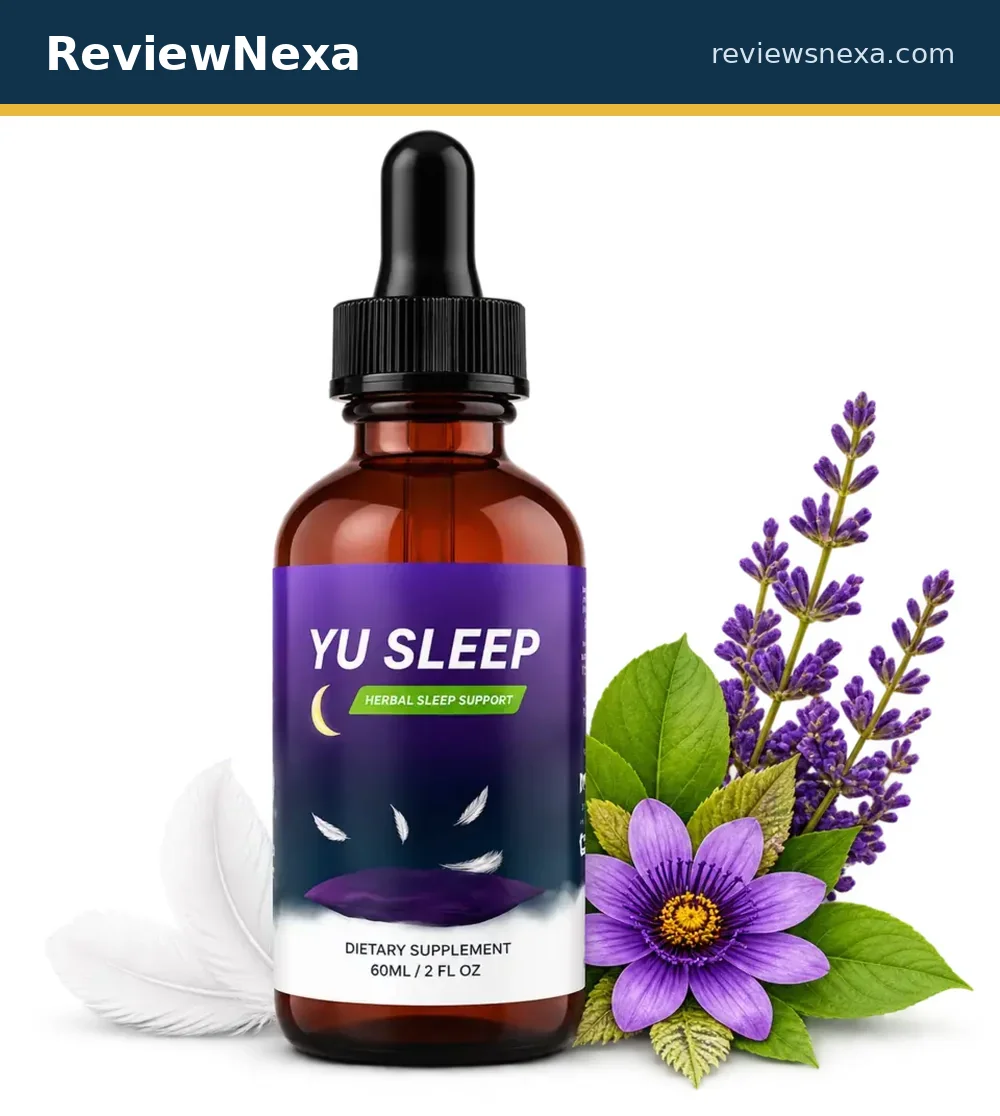
- Liquid dropper formula
- 0.9 mg melatonin disclosed
- 10 named components
- Money-back guarantee advertised
YU Sleep Specifications
| Product Name | YU Sleep |
|---|---|
| Category | Sleep & Relaxation |
| PACKAGE | REPORTED TOTAL |
| 1-month supply | $69 plus shipping |
| 3-month supply (+ bonuses) | $177 |
| Pricing | Check the official website for current pricing and package options. |
| Availability | Official website only — verify at checkout. |
Here’s an awkward way to open a review: YU Sleep’s own product page lists 0.9 mg of melatonin per serving, while some of its promotional materials describe the formula as “melatonin-free.” Both can’t be true — and the printed label is the one that counts. That contradiction shaped everything else we checked: the ingredients, the pricing, the guarantee fine print, and the questions genuinely worth asking before you order.
KEY TAKEAWAYS
- A liquid dropper formula with a low, openly disclosed melatonin dose (0.9 mg)
- Ten named components — but nine of the ten have no disclosed dose on the materials we could verify
- The label says melatonin; some promo copy says “melatonin-free.” It can’t be both
- Pricing tiers and the guarantee length differ from source to source — verify both on the live checkout
- The 5-HTP is the ingredient that should make antidepressant users pause — check with a clinician first
What Exactly Is YU Sleep?
YU Sleep is a liquid sleep supplement sold in a dropper bottle — two droppers, roughly 2 ml, taken under the tongue 30–45 minutes before bed. The marketing presents a Dr. Collins behind the GetYuSleep brand, and the sales pitch leans on three ideas: a “30-second cherry trick” built around tart cherry, a “nano-enhanced” liquid delivery the vendor says absorbs better, and a 60- to 90-day course meant to “restore” your sleep system. Take the branding at face value; we couldn’t independently verify the nano claim or the doctor’s role, and neither claim changes what’s in the bottle.
Who’s it aimed at? The seller’s own framing points at adults who lie awake with a racing mind, people who wake up at 3 AM, and anyone who’s felt groggy on standard high-dose melatonin pills. It is not positioned as a treatment for diagnosed insomnia or sleep apnea — if either of those describes you, this is a conversation for your doctor, not a checkout page.
The Label Contradiction — Read This First
This is the part that kept nagging us. The product page we reviewed discloses 0.9 mg of melatonin per serving. Meanwhile, floating promotional copy for the same product has described the formula as “melatonin-free.” Those two statements cannot coexist, and in any disagreement between marketing language and a printed label, the label wins. The product contains melatonin. Full stop.
Why does this matter more than a typo? Because melatonin is a deal-breaker ingredient for some buyers — people deliberately avoiding it, or combining it unknowingly with other sleep products. A shopper who buys on the “melatonin-free” promise and then reads the label has every right to feel misled. It’s also worth knowing the seller markets the formula as non-habit-forming and plant-based; those are the vendor’s words, not independently verified findings, and we’re presenting them that way on purpose.
The Seller-Listed Formula
Ten components are named across the sources we cross-checked: red tart cherry extract, 5-HTP, vitamins B6 and B2, magnesium glycinate, apigenin, lemon balm extract, L-theanine, GABA, and melatonin at 0.9 mg. The honest catch: melatonin is the only one with a disclosed dose. For the other nine, the amounts simply aren’t published in the materials we could verify — so any review quoting exact milligram figures for them is guessing.
Red tart cherry5-HTPVitamin B6Vitamin B2Magnesium glycinateApigeninLemon balmL-theanineGABAMelatonin0.9 mgVerify against the current label — nine of ten dosages are undisclosed in the seller’s published materials.
Seller-listed formula — verify against the current label.
One more flag, because it tells you a lot about this corner of the internet: other review sites publish different formulas for what they call the same product. One lists 3 mg of melatonin plus valerian and chamomile; another describes capsules containing ashwagandha and passionflower. Those don’t match the dropper-bottle, 10-ingredient list two of our sources agree on — and one of them isn’t even a liquid. Our read: different products, outdated pages, or sloppy reviewing. Either way, don’t mix their claims into this one. This review covers only the liquid formula with 0.9 mg melatonin — that’s the product our sources actually describe.
Buying Legitimacy: Where It Actually Comes From
YU Sleep is sold online through the seller’s funnel, with checkout and refunds processed through ClickBank — the established third-party payment platform, which is also where the advertised money-back guarantee is handled. The seller’s materials describe it as a one-time purchase with no autoship. We’d treat that as a claim to confirm at checkout rather than a verified policy, because we didn’t see the live order page.
A word of caution on the website itself: different review pages point to different domains for this product. We’re not going to crown one as “the” official site — funnels change. Whatever page you land on, the move is the same: check that you’re on a live, working checkout, read the guarantee terms printed there, and keep a screenshot.
Does It Actually Work? What Can Honestly Be Said
Let’s separate three things. Starting with the ingredients: melatonin itself has modest research support for helping people fall asleep, and 0.9 mg is a conservative dose by any standard — roughly a tenth of the 3–10 mg pills on drugstore shelves, which plausibly means less morning grogginess. Tart cherry has small studies behind its sleep-wake timing angle. The 5-HTP, L-theanine, GABA, lemon balm, and apigenin are all recognizable sleep-aisle names with ingredient-level research of varying strength.
Then the product itself: there is no published trial of this finished blend. That means every “works in layers” story — the nano delivery speeding absorption, the botanicals quieting mental chatter — is the seller’s narrative, not an established mechanism. Ingredient research is not product evidence, and we won’t pretend otherwise.
And then the buyers: what do they actually report? The common thread across the buyer reviews we read is faster sleep onset — many describe drifting off within 15–30 minutes — fewer 3 AM wake-ups, and a steadier night-to-night effect than melatonin gummies, without the groggy morning. Those are reviewer reports, not verified findings: anecdotes from affiliate-flavored review pages and buyer roundups, and we have no way to confirm them. Treat them as directional, not as proof.
Scientific & Regulatory Context
A few independent references worth a look before you weigh a sleep formula like this one:
- FDA: Supplement Your Knowledge. What the FDA regulates — explains why a product like YU Sleep can be sold without FDA approval of its sleep claims — and why that approval was never required for a supplement.
- NIH Office of Dietary Supplements. Ingredient fact sheets — the federal reference desk for what’s on this label (melatonin, magnesium, 5-HTP, and company). Good context on individual ingredients — not evidence that this particular blend works.
- Wikipedia: Dietary supplement. Dietary supplement — regulation & background — a plain-English rundown of how supplement oversight actually works in the United States.
- Independent buyer feedback. Public reviews on platforms such as Trustpilot and the Better Business Bureau can surface order, shipping, and refund complaint patterns for a seller — useful signal, but still anecdotes, not clinical findings.
Bottom line: the dose is conservative and the ingredient list is named — both genuine pluses. But with no trial of the finished formula and a label that contradicts its own marketing, “does it work” is a question only your own experience (and the guarantee terms) can answer.
Reviews and Complaints: What Buyers Report
A necessary caveat before the roundup: independent coverage of this product is thin. Most of what ranks for it reads like syndicated copies of a single affiliate press release, so “reviews” here mostly means buyer reports quoted on review-style pages — unverified, and we’re labeling them as such.
The praise thread. The positives cluster around the same points: falling asleep faster, fewer middle-of-the-night wake-ups, and mornings that feel clearer than after high-dose melatonin. A few reviewers specifically say the liquid feels steadier night to night than the gummies they’d tried before. Encouraging — and still anecdotal.
Now the complaints. The most consistent gripe is that nothing happens on night one; reviewers and the seller alike describe a gradual build over 2–4 weeks, so anyone expecting a sedative will be disappointed. Then the money complaints: the price feels premium, and one reviewer flagged a multi-bottle minimum order as a real commitment. Shipping delays pop up occasionally too.
The side-effect picture. Vivid dreams in the first few nights and a warm sensation — sometimes a touch of morning grogginess — are the most commonly mentioned downsides, and reviewers generally say they fade within the first week. We didn’t see anything alarming reported, but “didn’t see” is the honest limit of desk research.
Pros, Cons & Limitations
What’s working in its favor
- Liquid dropper format. No pills at bedtime — a real, practical difference for the pill-averse.
- Ten named components. More label transparency than most of the sleep aisle bothers with.
- Melatonin dose disclosed — and low. 0.9 mg is conservative next to 3–10 mg drugstore pills, which plausibly means less grogginess.
- Money-back guarantee advertised. A written return window through ClickBank gives the purchase an exit ramp — read the terms, obviously.
What gives us pause
- The “melatonin-free” contradiction. Marketing that denies an ingredient the label discloses is a trust problem, plain and simple.
- Nine of ten dosages undisclosed. Naming ingredients without amounts tells you what’s in the bottle, not how much.
- “Nano” delivery is the vendor’s word. Not independently tested, so treat it as branding, not science.
- Details disagree across sources. Pricing tiers and the guarantee length don’t line up from one review page to the next.
Limitations of this review itself. We didn’t test the product — this is desk research, and we say so plainly. No published trial of the finished formula exists. Buyer reports are anecdotal, independent coverage is thin, and the seller’s own materials contradict each other on melatonin. If you want certainty this page can’t give you, you’re right — it can’t.
Price & Packages: Reported Figures, Verify Live
Here’s where the sources start disagreeing, so we’ll show our work. Recent writeups (including an archived review and a comparison piece) put a single bottle around $69 plus shipping, a three-month supply around $177, and a six-month supply around $234 with advertised free shipping and digital bonuses. Another review mentions a two-bottle minimum order and different per-bottle math entirely.
| PACKAGE | REPORTED TOTAL | PER BOTTLE (AS REPORTED) |
|---|---|---|
| 1-month supply | $69 plus shipping | $69.00 |
| 3-month supply (+ bonuses) | $177 | $59.00 |
| 6-month supply (free shipping + bonuses) | $234 | $39.00 |
As reported at the time of writing — sources disagree on exact tiers, so verify on the live checkout.
The multi-bottle packages are said to include three digital bonuses: a sleep-stories audio, an anti-aging ebook, and a bedtime snack guide. Nice-to-haves, if they’re still offered — confirm what’s actually bundled before the price sways you.
Refund Info: Read the Checkout, Not the Headline
The seller advertises a money-back guarantee processed through ClickBank. Most of the sources we checked say 60 days; one review site says 90. That’s a genuine conflict, not a rounding error — and it means the only number that matters is the one printed on the checkout page in front of you.
The fine print we’ve seen in writeups: you must return the product, you pay the return shipping, and refunds are limited per the vendor’s terms. In other words, it’s a return window, not a no-questions refund. Screenshot the guarantee exactly as shown at checkout, because headlines change faster than policies.
What this badge means
The badge represents the seller-advertised return window — not guaranteed results and not a cost-free return. Returning the product and covering return shipping are typically required; screenshot the terms exactly as shown at checkout.
Who It’s For — and Who Should Skip It
A reasonable fit: a healthy adult who struggles mainly with falling asleep, feels groggy on high-dose melatonin, prefers a liquid to capsules at night, and can commit to several weeks of consistent use before judging it.
A poor fit: anyone who wants zero melatonin in the bottle (this one has it, whatever the promo copy says); anyone on antidepressants or other serotonin-affecting medication who hasn’t asked a clinician; anyone expecting a sedative to work on night one; and anyone looking for treatment of diagnosed insomnia or sleep apnea, which this product is not.
Questions to Ask Before Buying
- Do I actually want melatonin? If the answer is no, stop here — the label says 0.9 mg regardless of what the marketing claims.
- Am I on anything that affects serotonin? The 5-HTP can interact with antidepressants. This is a clinician question, not a FAQ question.
- Am I comfortable with nine undisclosed dosages? You’ll know the ingredient names but not their amounts.
- Can I give it 2–4 weeks? Reviewers and the seller agree: judging it on night three misses the point.
- Have I screenshotted the guarantee terms? The 60-vs-90-day conflict means the checkout page — captured in writing — is your only reliable source.
How to Take It
Per the seller’s directions: two droppers (about 2 ml) 30–45 minutes before bed, held under the tongue for around 20 seconds according to some guides. One nightly dose; don’t stack it with other sedating products without professional guidance. And the part worth repeating: allow a 2–4 week adaptation window — this is positioned as a gradual nightly ritual, not a knockout drop.
FAQ
Does YU Sleep contain melatonin?
Yes. The product page discloses 0.9 mg per serving — the label settles it, even though some promotional copy describes the formula as melatonin-free. If you’re avoiding melatonin, this isn’t your product.
Will it knock the user out on night one?
No. Nothing in the formula is a sedative, and both the seller and reviewers describe a gradual 2–4 week build rather than a night-one knockout. Expect a nightly ritual, not a switch.
Is YU Sleep habit-forming?
No. The seller describes it as non-habit-forming, and none of the ten named ingredients is a known dependency-forming substance. That description is the vendor’s claim, not an independently verified finding.
Can the user take it with an antidepressant?
No. Not without a clinician’s input first. The 5-HTP works on the serotonin pathway and can interact with antidepressants, so this one belongs in a doctor-or-pharmacist conversation, not a checkout-page gamble.
Does the 60-day guarantee mean a no-questions refund?
No. The written terms we’ve seen require returning the product and paying return shipping, with refunds limited per the vendor’s terms. And note the wrinkle: most sources say 60 days, one says 90 — screenshot the exact terms at checkout.
Is Yu Sleep a scam?
No. Yu Sleep is a real, purchasable product that ships through ClickBank, with a stated 60-day money-back guarantee backing every order. "Scam" would mean fake goods or vanished payments, and we found no evidence of that.
Where can I buy Yu Sleep?
Through the official website. Yu Sleep is not sold on Amazon, eBay, or in retail stores — buying from the official site is the only way to guarantee an authentic product and qualify for the money-back guarantee.
Is Yu Sleep safe? Are there side effects?
Generally. Yu Sleep is made with natural ingredients in a registered facility, with no serious safety flags in our research. That said, no supplement is risk-free: check the label, follow the directions, and talk to your doctor first if you're pregnant, nursing, or taking medication.
Is Yu Sleep worth buying?
Depends. Yu Sleep is worth trying if the formula matches your specific concern and you're comfortable with the price — especially with the 60-day money-back guarantee removing most of the risk. It is not worth buying if you expect overnight or guaranteed results, because no supplement can promise those.
Our Verdict: YU Sleep
OUR VERDICT
YU Sleep gets a few things right that much of the sleep aisle doesn’t: a named ten-ingredient list, a disclosed melatonin dose, and a dose low enough (0.9 mg) to plausibly dodge the grogginess of drugstore pills. But the “melatonin-free” marketing contradicting the label is a genuine trust problem, nine of ten dosages stay undisclosed, and pricing plus guarantee details shift from source to source. It’s a reasonable experiment for healthy adults with sleep-onset trouble who’ve made peace with all of that — and a skip for anyone avoiding melatonin or taking antidepressants without a clinician’s sign-off. Whatever you decide, verify the live price and guarantee terms at checkout before you pay.
Final Buyer Checkpoint
- ✓ Verify the current price and package on the live checkout before paying — the figures here were reported at the time of writing and sources disagree.
- ✓ Read the current guarantee terms exactly as shown at checkout: return required, buyer pays return shipping, and the 60-vs-90-day length is still unresolved.
- ✓ On any serotonin-affecting medication (e.g. antidepressants)? The 5-HTP can interact — ask a clinician first.
- ✓ Remember this is a dietary supplement, not a medicine — not intended to diagnose, treat, cure or prevent any disease.
- ✓ Decide whether you actually want melatonin in the bottle — the label says 0.9 mg, whatever the promo copy claims.
Related Reviews

Testing statement: Desk research · No hands-on or clinical testing