
Last Updated On September 30, 2026 by ReviewNexa Editorial
Audifort Review: Hearing Drops, Honestly Evaluated
A liquid hearing-support formula with an interesting evidence-adjacent premise and sales copy that runs ahead of it — here is what’s real, and what isn’t, before you spend a dollar.
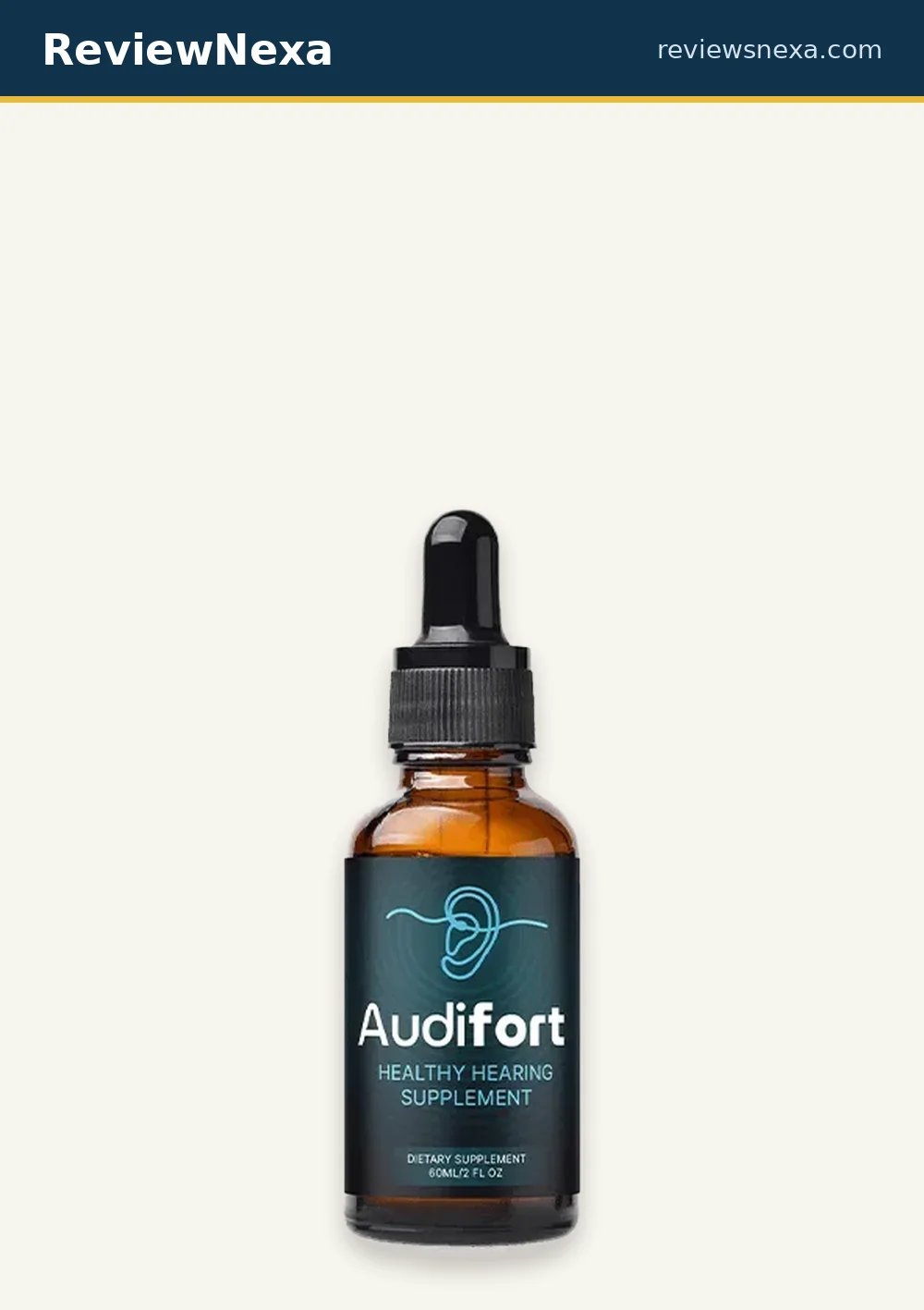
- Liquid drops, not capsules
- 20-ingredient botanical formula
- 90-day ClickBank guarantee
- $49–$79 per bottle
Audifort Specifications
| Product Name | Audifort |
|---|---|
| Category | Hearing Health |
| Product | Audifort |
| Format | Liquid drops in an amber dropper bottle; one dropper twice daily, under the tongue or in a drink |
| What it claims | The vendor claims it supports hearing clarity and eases ringing by supporting inner-ear circulation and nerve calm |
| Guarantee | 90-day money-back guarantee, handled through ClickBank |
| Official source | Vendor sales page (via the affiliate link on this page) |
| Pricing | Check the official website for current pricing and package options. |
| Availability | Official website only — verify at checkout. |
If you’ve been searching for something to quiet the ringing or sharpen your hearing, Audifort has probably crossed your screen. It’s a liquid hearing-support supplement — drops you take under the tongue or in a drink — built around nerve-calming and circulation-supporting botanicals. The sales page pairs a genuinely buyer-friendly 90-day guarantee with “hearing restoration” language the ingredient evidence can’t back up. That tension is the whole story of this product, and this review walks through both sides.
This review covers what’s really in the bottle, what the research behind its key ingredients does and doesn’t establish, what the pricing and refund terms look like in practice, and the questions worth asking yourself before ordering. Bottom line up front: this is a legitimate-category supplement sold with exaggerated marketing. The refund policy is the strongest part of the offer; the boldest claims are the weakest.
- Drops, not capsules. A 20-ingredient liquid formula taken as a dropperful twice daily — practical if you dislike swallowing large pills.
- The GABA angle is the most interesting part. Published research links GABA to tinnitus, but no trial has tested this complete formula, and individual ingredient doses aren’t disclosed.
- The marketing outruns the evidence. “Hearing restoration” language appears on the sales page; no supplement is clinically established to restore hearing.
- The guarantee is the real safety net. A 90-day money-back policy handled through ClickBank — the most verifiable, buyer-friendly element of the whole offer.
- Odd domain setup. The current order page sits on a domain that doesn’t match the product name. It’s the real checkout, but the mismatch is worth knowing about.
What Is Audifort?
Audifort is a liquid dietary supplement positioned for hearing support — specifically for people bothered by ringing in the ears (tinnitus), mild hearing dullness, and the concentration problems that tend to come along with both. It comes in an amber dropper bottle rather than the capsule bottles most hearing supplements ship in, and the routine is simple: one dropper in the morning before breakfast and one before lunch, either under the tongue or mixed into water or juice.
The first thing to clear up is where it lives. The vendor’s current order page sits on a domain name that doesn’t match the product at all — you’ll find it linked at the first mention of the product name above. Older write-ups across the web point to addresses that no longer work, and the mismatch understandably makes buyers nervous. We verified it: that link is the real, live Audifort checkout. Odd, yes — but real.
Behind it sits a named creator, Andrew Ross, whose signature appears on the sales page. Named is better than anonymous, though it doesn’t independently verify anything about the formula’s quality. Payment and refunds run through ClickBank, the long-running digital retail platform — which matters, because it means the refund policy is administered by a third-party platform rather than the supplement vendor.
Product Facts at a Glance
| Product | Audifort |
|---|---|
| Category | Hearing Health |
| Format | Liquid drops in an amber dropper bottle; one dropper twice daily, under the tongue or in a drink |
| What it claims | The vendor claims it supports hearing clarity and eases ringing by supporting inner-ear circulation and nerve calm |
| Guarantee | 90-day money-back guarantee, handled through ClickBank |
| Official source | Vendor sales page (via the affiliate link on this page) |
How It Works
The vendor’s pitch runs through three channels, and they’re worth separating into what’s plausible and what’s marketing. First, the antioxidant channel: the formula includes botanicals said to protect delicate inner-ear cells from oxidative stress. Oxidative stress does matter in age-related hearing decline, so this is the least objectionable pillar — but “contains antioxidants” is a long way from “protects your hearing,” and that leap is the vendor’s, not the literature’s.
Second, circulation: several ingredients are framed as supporting blood flow to the inner ear, on the theory that better-fed auditory tissue performs better. Circulation and hearing are linked in real research. Still, no clinical trial has tied this specific blend to improved blood flow in anyone’s ears.
Third — and this is where the formula gets interesting — the GABA channel. GABA is the nervous system’s main inhibitory neurotransmitter, and peer-reviewed research has found measurably lower GABA in the auditory cortices of people with tinnitus. A 2025 clinical trial even found that directly modulating GABA-A receptors reduced tinnitus severity within hours. The catch: that trial used an intravenous drug, not an oral supplement, and whether oral GABA reaches the brain in meaningful concentrations is actively debated. So the mechanism has a real research pedigree; the supplement’s ability to exploit it is unproven.
What's Inside
The vendor says the formula contains 20 ingredients, but only six are highlighted on the product page: GABA, grape seed extract, green tea extract (EGCG), capsicum annuum, gymnema sylvestre, and maca root. Individual doses within the blend aren’t disclosed — it’s effectively a proprietary formula, which means you can’t check the label against the doses used in any research.
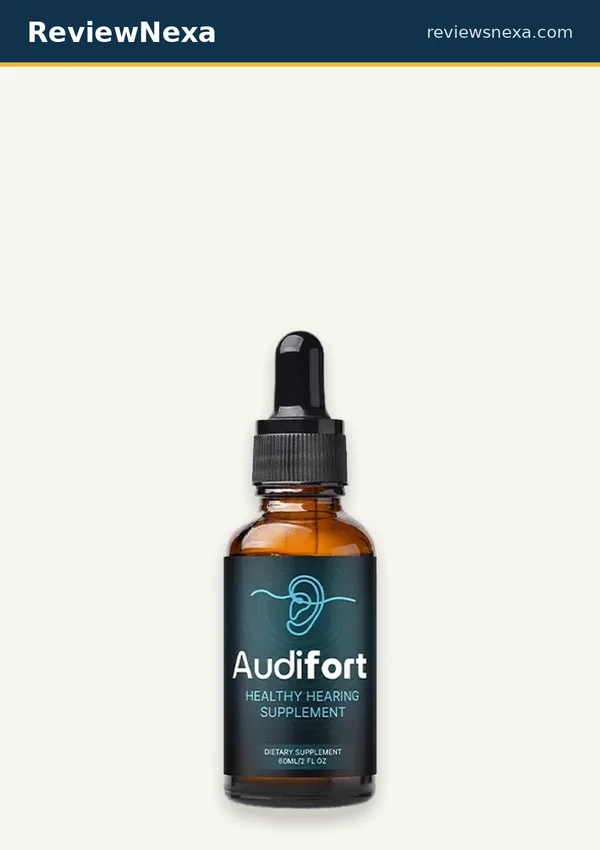
Here’s the honest read on each named ingredient. GABA is the most tinnitus-relevant, for the reasons above — strong mechanism literature, unresolved delivery question. Grape seed extract brings the clearest cochlear-specific antioxidant evidence of the bunch; that mechanism doesn’t even require crossing the blood-brain barrier. Green tea EGCG has real research behind it for microvascular health, though it also means the formula carries mild caffeine — caffeine-sensitive people should note that.
Capsicum annuum (the pepper plant) is included for circulation and has documented vasodilatory and anti-inflammatory activity in the literature. Gymnema sylvestre is an Ayurvedic herb with solid blood-sugar research, but its role in a hearing formula is honestly unclear — it reads like a borrowed ingredient. Maca root is an adaptogen with documented energy and stress-resilience effects; chronic stress worsens tinnitus, so it fits the logic, even if maca itself has no direct hearing evidence. The remaining ~14 ingredients are unnamed and undosed on the page — you can’t evaluate what you can’t see.
What the Evidence Can and Cannot Establish
Let’s be precise about the gap between research and this bottle. The GABA-tinnitus connection is one of the better-evidenced neurochemical findings in tinnitus research — documented in the Journal of Neuroscience, confirmed in Nature Scientific Reports, and tested in a 2025 Frontiers in Neurology trial. But that trial tested an intravenous GABA modulator, not oral GABA from a supplement. The jump from “the mechanism is real” to “this bottle modulates that mechanism” has not been made, by anyone, in any published trial of Audifort itself. Because there isn’t one. The vendor has never published a clinical trial of the complete formula.
What the evidence cannot establish: that this product restores hearing, eliminates tinnitus, or repairs auditory nerves. No over-the-counter herbal blend is clinically established to do any of those things, and nothing on the vendor’s page proves otherwise. What it can establish: the individual ingredients are real botanicals with real (if mostly indirect) research, nothing on the disclosed label looks dangerous, and the formula’s logic — antioxidants for cochlear protection, circulation support, nerve calm — is coherent even if unproven.
One more flag for intellectual honesty: the rating the sales page displays — a near-perfect score supposedly based on thousands of reviews — cannot be verified anywhere independent. We won’t repeat the number as a fact because it isn’t one. Judge this product on its label, its price, and its guarantee — not on its self-reported score.
Pros and Limitations
Pros
- Liquid format — a real usability win for anyone who struggles with capsules, especially the older crowd this targets
- 90-day money-back guarantee administered through ClickBank, a standardized third-party refund process rather than vendor goodwill
- Key ingredients are named (GABA, grape seed, green tea EGCG, capsicum, gymnema, maca) — better than formulas that hide everything behind a proprietary label
- The vendor states plainly this isn’t a hearing-aid replacement and sets gradual expectations — measured by this industry’s standards
- GABA mechanism draws on real, published tinnitus research rather than a made-up mechanism
Limitations
- No clinical trial of the complete formula; individual ingredient doses undisclosed, so nothing can be checked against research doses
- “Hearing restoration” marketing language plainly outruns the evidence — the single biggest reason for skepticism
- Rating/review-count claims on the sales page are unverifiable; no independent review body exists for this product
- Online-only purchase — no Amazon or pharmacy presence, so no price comparison and no retail return desk
- Order page sits on a domain that doesn’t match the product name — legitimate, but confusing
- Green tea means mild caffeine; and anyone on medication should check with their clinician first, since most of the formula is undisclosed
Price & Refund
When we researched this in September 2026, the vendor’s order page showed three packages: 2 bottles at $158 total (plus shipping), 3 bottles at $207 total (free US shipping, plus two bonus digital guides), and 6 bottles at $294 total (free shipping, two bonus guides) — roughly $49–$79 per bottle. Read Guide on the live page for current totals, because supplement pricing shifts constantly and the checkout total is the only number that matters.
The refund side is the strongest part of the offer. The 90-day money-back guarantee is administered through ClickBank, which processes returns through a standardized system — and third-party reports say it covers even empty bottles, with refunds processed within about 48 hours of return receipt minus shipping and handling. Practical advice: save your ClickBank order confirmation email the moment you buy, since it’s your proof of purchase for any refund request. The guarantee covers your money, not your results — but as buyer protection goes in this category, it’s about as good as it gets.
Who May Consider It
This is the kind of product that fits a narrow reader: an adult with mild, already-medically-checked hearing dullness or occasional ringing, who’s comfortable trying a botanical blend and — critically — who will actually follow through on the refund if nothing changes. If you take medication, have a condition that affects blood sugar or blood pressure, or simply want evidence before spending, this probably isn’t your product.
And the non-negotiable boundary: if your hearing has changed suddenly, or you’re dealing with ear pain, discharge, or dizziness, skip the supplement shelf entirely and see a doctor. That’s a medical situation, not a drops situation. An audiologist is a better investment than any bottle.
Questions to Ask Before Buying
- What am I really expecting — gentle wellness support, or a fix? Only one of those is plausible here.
- Has my hearing been evaluated by a professional? A supplement never substitutes for an audiology appointment.
- Am I comfortable buying a formula whose individual doses aren’t disclosed — meaning my doctor can’t fully assess it from the label?
- Will I honestly use the 90-day guarantee if I notice nothing, or will the bottle sit in a cabinet past the deadline?
FAQ
Is Audifort a scam?
No. It's a real liquid supplement that ships through ClickBank, with a real third-party refund window. "Scam" would mean fake goods or vanished payments, and we found no evidence of either. That said, its marketing exaggerates what the evidence supports, so it's better described as an overpromising product than a dishonest one.
Can Audifort restore hearing or cure tinnitus?
No. No dietary supplement on the market is clinically established to restore hearing or cure tinnitus, and Audifort is no exception. The sales page's boldest language — restoration, nerve repair — goes well beyond what the ingredients can plausibly deliver. Treat it as possible wellness support, not a cure.
Will it work quickly?
No. And the vendor is unusually upfront about this. Its own guidance says most users should allow four or more months of consistent use before judging results, which is an admission that nothing dramatic happens overnight. Anyone promising instant hearing improvement is selling something.
Is Audifort safe to take?
Yes. As far as our research could determine. The disclosed ingredients are standard botanicals and nutrients with no serious safety flags, and no adverse events surfaced in research. But "no news" isn't proof of safety — the formula's full contents aren't disclosed, so check with your clinician first if you take medication, are pregnant or nursing, or manage a health condition.
Does the 90-day guarantee actually work?
Yes. The guarantee is administered through ClickBank — an established payment platform with a standardized refund process — rather than relying on the vendor's goodwill, and reports say it covers even empty bottles. Keep your order confirmation email; it's your proof of purchase if you request a refund.
Is Audifort sold on Amazon or in pharmacies?
No. It's sold only through the vendor's own order page — linked at the first mention of the product name above, and the real checkout despite the odd domain. You won't find it on store shelves. Buy only through the official channel; third-party listings risk counterfeits.
How do you take the drops?
Yes. The routine is straightforward: one full dropper (about 15 drops) in the morning before breakfast and one before lunch, held under the tongue or mixed into water or juice. Consistency matters more than timing precision; the vendor suggests daily use for at least several months.
Is Audifort worth buying?
Depends. Audifort is worth trying if the formula matches your specific concern and you're comfortable with the price — especially with the 90-day money-back guarantee removing most of the risk. It is not worth buying if you expect overnight or guaranteed results, because no supplement can promise those.
Our Verdict: Audifort
Related Reviews

Testing statement: Desk research · No hands-on or clinical testing.
1 thought on “Audifort Review: Hearing Drops, Honestly Evaluated”