
Last Updated On September 30, 2026 by ReviewNexa Editorial
Nagano Tonic Review (2026 Update): What a Weight-Loss Powder Can and Can’t Do
Nagano Tonic is sold as a morning drink mix that “reawakens” a sluggish metabolism. The ingredient roster is long and plausible — but the doses aren’t published, the ratings are marketing, and the guarantee deserves a second look before you pay.
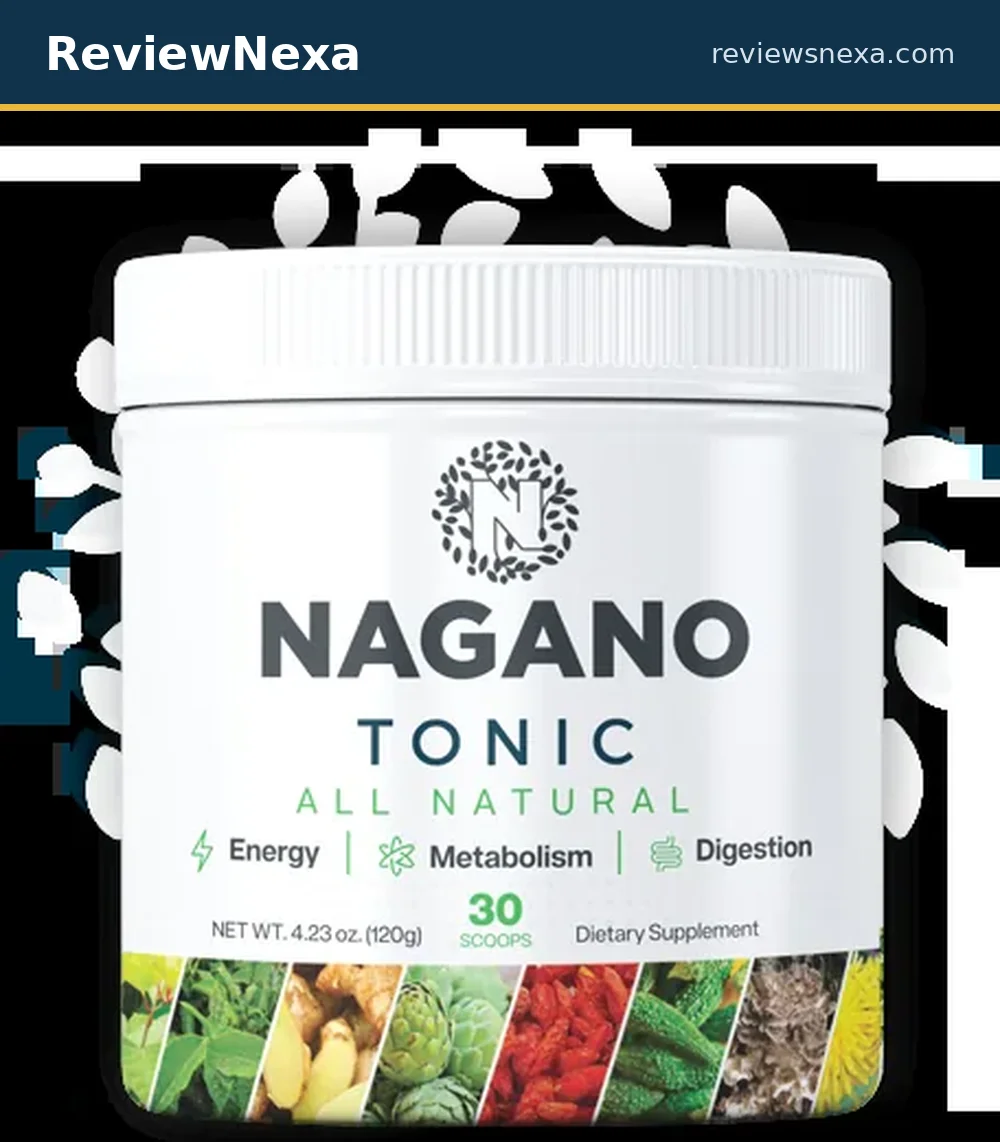
- Powdered drink mix
- EGCG + adaptogens
- Stimulant-free (vendor-stated)
- 180-day guarantee stated
Nagano Tonic Specifications
| Product Name | Nagano Tonic |
|---|---|
| Category | Weight Management |
| Product | Nagano Tonic ("Nagano Lean Body Tonic") — powdered weight-management drink |
| Format | Powder — one scoop mixed with water or a beverage, each morning |
| What it claims | The vendor positions it as a daily tonic that "reawakens" a dormant metabolism to support fat loss, energy, digestion, and craving control. |
| Guarantee | 180-day money-back guarantee stated by the vendor; confirm the current wording on the sales page before ordering. |
| Official source | Vendor sales page (via the affiliate link on this page) |
| Pricing | Check the official website for current pricing and package options. |
| Availability | Official website only — verify at checkout. |
Every few months, another weight-loss powder goes viral. This one is Nagano Tonic — full name “Nagano Lean Body Tonic” — a morning drink mix that promises to wake up a “dormant” metabolism with a Japanese-inspired formula. Green-tea EGCG, ashwagandha, ginseng: the roster sounds like it belongs in a wellness cabinet, not a hype machine.
So we read the sales page, the press-wire reprints, the affiliate “reviews,” and the complaint threads, and stripped out the noise. Here’s the bottom line up front: the formula’s ingredient list is the credible half of this product. The other half — the headline ratings, the user counts, the “Japanese elixir” story — is marketing theater. And the 180-day guarantee, generous on paper, has drawn real complaints from people trying to use it.
- “Nagano Tonic” is the short name for Nagano Lean Body Tonic — a powdered drink mix taken as one scoop each morning, positioned for weight management and metabolic support.
- The ingredient roster is long and recognizable: EGCG from green tea, panax ginseng, mangosteen, bitter melon, ashwagandha, plus inulin, cinnamon, and ginger. Exact doses are unpublished.
- Reported pricing at research time: $69 for one bottle, $177 for three, $234 for six. A 180-day money-back guarantee is stated — but refund-friction complaints exist, so confirm the mechanics first.
- The review landscape is almost entirely affiliate marketing. Headline ratings and user counts are sales figures, not independent evidence.
- Taste and mixability draw the most consistent complaints. Expect herbal and earthy — not dessert.
What Is Nagano Tonic?
The pitch goes like this: as you age, your metabolism “falls asleep” — slowed by stress, poor sleep, toxins — and no diet or workout plan fixes that until you address the root cause. Nagano Tonic positions itself as the fix: a once-daily powdered tonic you stir into water each morning, built from Japanese herbal tradition and modern metabolic science. One scoop, no capsules, no stimulant jitters. That’s the appeal, and honestly it’s a real one — plenty of people would rather drink something than swallow pills.
What arrives in the jar is a broad-spectrum wellness powder. The formula leans on thermogenic botanicals (EGCG, ginseng), adaptogens (ashwagandha, eleuthero root), gut-support ingredients (inulin, cinnamon, ginger), and a long tail of antioxidant fruits and greens — mangosteen, camu camu, acerola, blueberry, pomegranate, spirulina, barley grass, spinach, asparagus, broccoli. The vendor says it’s stimulant-free, non-GMO, and free of gluten, soy, and dairy. The facility is described as FDA-registered and GMP-compliant.
A word about the branding: the “Japanese elixir” narrative is a story, not a provenance. Nothing in the public material ties the formula to Japan beyond the name and the marketing copy. That doesn’t disqualify the ingredients — several are genuinely well-regarded botanicals — but judge the powder in the jar, not the legend on the label.
Product Facts at a Glance
| Product | Nagano Tonic (“Nagano Lean Body Tonic”) — powdered weight-management drink |
|---|---|
| Category | Weight Management |
| Format | Powder — one scoop mixed with water or a beverage, each morning |
| What it claims | The vendor positions it as a daily tonic that “reawakens” a dormant metabolism to support fat loss, energy, digestion, and craving control. |
| Guarantee | 180-day money-back guarantee stated by the vendor; confirm the current wording on the sales page before ordering. |
| Official source | Vendor sales page (via the affiliate link on this page) |
How It Works
The vendor’s mechanism comes in three layers, and it’s worth hearing them in the vendor’s own framing before we get skeptical. First, “metabolism activators” — ginseng, EGCG, and bitter melon — are said to support mitochondrial activity, the cell-level machinery that converts food into energy, nudging the body back toward burning fat at rest. Second, antioxidants like mangosteen and adaptogens like ashwagandha are framed as calming the body’s internal stress response — lowering cortisol-driven fat storage around the belly and supporting thyroid rhythm. Third, the gut-and-sleep layer: prebiotic inulin and cinnamon for blood-sugar steadiness and fewer cravings, plus camu camu and ginger positioned around restful sleep, which the vendor correctly notes is underrated in weight management.
Is the story biologically coherent? Broadly, yes — metabolism, stress hormones, gut health, and sleep really are connected to weight. Is it proven for this product? No. That’s a different claim entirely, and there’s no finished-product trial to support it. Treat the mechanism as a plausible narrative the vendor constructed around real ingredients, not as evidence the powder does what the story says.
What's Inside
The ingredient list is the strongest part of the product — and also the most frustrating, because amounts aren’t disclosed. Without doses, a roster can’t be weighed against the research. Still, the components fall into recognizable groups:
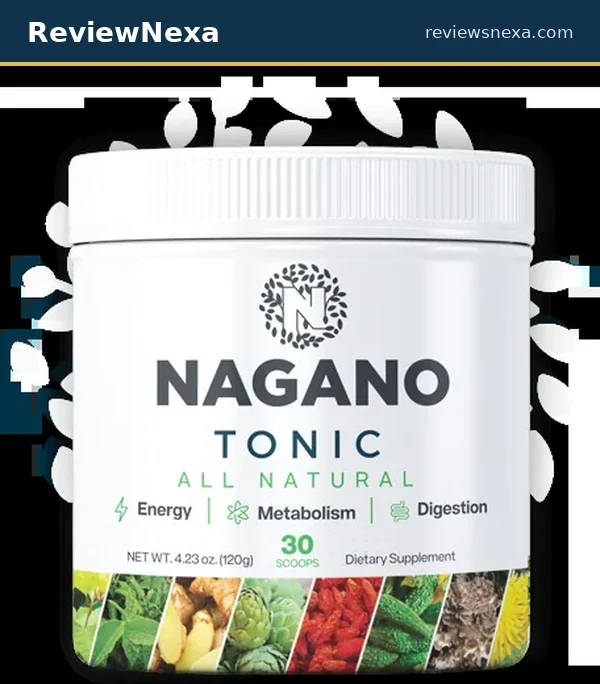
Official Nagano Tonic product imagery — the powdered drink mix, taken as one scoop each morning.
Metabolism-positioned botanicals. EGCG from green tea is the most-studied ingredient in the formula — modest thermogenic effects in the literature, but the dose here is unpublished, so the research can’t be mapped onto the jar. Panax ginseng (used for centuries against fatigue), mangosteen (xanthone antioxidants), and bitter melon (traditional blood-sugar botanical) round out the group.
Stress and hormone support. Ashwagandha — the best-known adaptogen on the list — is positioned against cortisol-driven belly fat and stress snacking, and eleuthero root is included for stamina and mental clarity without stimulants. The stress-craving angle is plausible; it is not fat-burning.
Gut, digestion, and fullness. Inulin, a prebiotic fiber, feeds gut bacteria and adds fullness; cinnamon cassia and ginger are positioned around blood-sugar steadiness and thermogenesis; alfalfa leaf brings fiber and minerals.
Antioxidant fruit-and-green blend. Camu camu and acerola (both vitamin-C heavy), blueberry, pomegranate, spirulina, barley grass, spinach, asparagus, and broccoli. Nutritionally respectable — not weight-loss drivers.
Some review sources also list piperine, resveratrol, fructooligosaccharides, and a probiotic blend, which suggests the formula details have shifted over time or vary by source. The honest summary: a credible botanical roster at unknown amounts. That’s the whole ingredient story in one sentence.
What the Evidence Can and Cannot Establish
Let’s be precise about what exists. There is no clinical trial on Nagano Tonic itself — not a small one, not an unpublished one anyone can point to. That matters, because only a trial on the finished formula could establish what the sales page implies: that this powder, as blended, produces the claimed results.
What exists instead is ingredient-level plausibility. Green-tea EGCG has the most research behind it, with modest effects on calorie expenditure in controlled studies — but “modest” and “at published doses” are doing heavy lifting in that sentence, and this product publishes no doses. Ashwagandha has reasonable evidence for stress and sleep support, which could plausibly nudge stress-driven eating. Inulin supports gut bacteria. None of that equals “this drink burns fat,” and the gap between ingredient research and formula claims is where most supplement marketing lives.
Then there’s the social proof. You’ll see “4.8/5” ratings and five-figure user counts across review sites. Those numbers are affiliate-marketing figures, repeated from sales copy — not independent data, and not worth a second thought in a buying decision. The actual user record is thin and mixed: reported positives (more energy, fewer cravings, a few pounds over weeks) sit next to taste complaints and slower-than-advertised results. Judge this product on its formula transparency and its refund terms, not its applause track.
Pros and Limitations
Pros
- Drink format — a genuine alternative for people who dislike capsules.
- Long, recognizable ingredient roster: EGCG, adaptogens, prebiotic fiber, antioxidant fruits.
- Stimulant-free and (per the vendor) non-GMO and free of gluten, soy, and dairy.
- The 180-day guarantee headline gives a long evaluation window — if it’s honored.
- Some users report better energy and fewer cravings around weeks three to six.
Limitations
- Exact ingredient doses are unpublished — the roster can’t be judged against research amounts.
- No clinical trial on the finished formula; weight-loss evidence is thin.
- The review ecosystem is almost entirely affiliate-driven; independent data is scarce.
- Taste and mixability draw real complaints: herbal, earthy flavor, clumping in cold water.
- Some sources report friction when buyers try to claim the 180-day refund.
- No named parent company is publicly confirmed — the seller is opaque.
- Third-party counterfeits are reported; only the vendor’s site counts for the guarantee.
Price & Refund
Pricing as widely reported at research time — treat every figure as a snapshot, not a promise: one bottle at $69 plus shipping; three bottles at $177 ($59 per bottle) with free US shipping; six bottles at $234 ($39 per bottle) with free US shipping. Multi-bottle orders have reportedly included bonus eBooks (“Anti-Aging Blueprint,” “Sleep The Fat Off,” “Energy Boosting Smoothies”) — sources disagree on whether it’s two or three, so don’t let the bonuses drive the decision. Verify the live totals at checkout; bundle pricing on this product has shifted over time.
The vendor states a 180-day money-back guarantee, which is genuinely long for the category. The caveat is real, though: complaint-oriented sources describe refund friction, and the archive of buyer reports suggests the buying channel matters — refunds and authenticity both hinge on ordering through the vendor’s site. Before you order, do these five things:
- Screenshot the live guarantee wording — the 180-day terms and the exact refund mechanics, as shown on the page you’re buying from.
- Confirm you’re on the vendor’s own site — third-party fakes are reported, and they don’t qualify for the guarantee.
- Keep your order confirmation — payment processing runs through ClickBank.
- Start any refund in writing through the vendor’s support, not by phone.
- Document everything — dates, names, reference numbers.
A guarantee is only as good as its claims process. The headline is generous; the process is where buyers have stumbled.
Who May Consider It
This makes the most sense for someone who wants a daily drink-format routine and understands what it is: metabolic-wellness support alongside diet and exercise, judged over weeks, not days. If the idea of a morning tonic helps you stay consistent — and you’d rather sip than swallow capsules — the format is the honest selling point.
Skip it if you’re pregnant, nursing, on medication, or managing a metabolic condition without your doctor’s input — the vendor says the same. And skip it if you’re buying the “elixir” story rather than the routine: no powder overrides eating habits, and anyone promising results in days is selling, not informing.
Questions to Ask Before Buying
- Is the 180-day guarantee wording still live on the page at checkout — and does it cover the bottle count I’m buying?
- Am I on the actual vendor’s site, or a third-party listing that voids the guarantee?
- Can I live with an herbal, earthy drink every single morning?
- Am I buying this for the routine — or for the “Japanese elixir” story?
FAQ
Is Nagano Tonic a legitimate product?
Yes. It's a real product sold through a live vendor site, and the sources we reviewed turned up no scam smoking-gun. But "legitimate" doesn't mean "proven": the company behind it is opaque, the marketing is aggressive, and there's no finished-product trial behind the claims.
Does Nagano Tonic burn fat?
No. No powder burns fat on its own. At best, the formula is metabolic-wellness support alongside diet and exercise, which is exactly what the vendor's own materials assume.
Does it come with a money-back guarantee?
Yes. The vendor states a 180-day money-back guarantee, which is generous for this category. But some buyers report refund friction, so screenshot the guarantee wording and confirm the mechanics before you order.
Is it stimulant-free?
Yes. The vendor states the formula is stimulant-free, non-GMO, and free of gluten, soy, and dairy. Take those as vendor claims rather than independently verified facts.
Are there side effects?
No. No serious ones surfaced in the coverage we reviewed. The recurring complaints are about the experience, not harm: herbal, earthy taste, clumping in cold water, and mild digestive adjustment in the first days for some users.
Can I buy Nagano Tonic on Amazon?
No. It's sold through the vendor's site only, and third-party counterfeits have been reported. Only the vendor's site qualifies for the guarantee.
Do I still need diet and exercise?
Yes. The positive user reports consistently involve diet and exercise. This is positioned as support for a routine, not a replacement for one.
Is Nagano Tonic worth buying?
Depends. Nagano Tonic is worth trying if the formula matches your specific concern and you're comfortable with the price — especially with the 180-day money-back guarantee removing most of the risk. It is not worth buying if you expect overnight or guaranteed results, because no supplement can promise those.
Our Verdict: Nagano Tonic
Related Reviews


Testing statement: Desk research · No hands-on or clinical testing.